


Should you build or buy a freelance marketplace in the United Kingdom? For most UK founders, buying a ready-made platform and customising only the parts that make your niche special is the fastest and most affordable route.
Three routes to launch · sample time to first live users
For most UK founders, buying a ready-made platform and customising only the parts that make your niche special is the fastest and most affordable route. Building from scratch suits founders with a large engineering budget and a truly new product idea. Buying as-is suits founders who want to test demand within weeks.
This guide helps you pick your route with confidence. Also, you will see a side-by-side comparison, a simple scoring framework, and sample numbers you can adapt. If you want to see what a complete projects, bids, milestones and escrow system looks like, explore this ready-made freelance marketplace software with projects, bids and escrow while you read.
What does a freelance marketplace platform actually need to work?
A freelance marketplace connects people who need work done with people who can do it. In addition, the platform earns trust by making the money side safe for both parties. Moreover, everything else is a layer on top of that promise.
Whichever route you choose, these building blocks must exist on launch day:
Notice how much of this list is plumbing rather than personality. Furthermore, your future customers will never praise your login screen or your invoice emails. Besides, they will praise how quickly they found the right person and how safe the payment felt.
That observation is the key to the whole build, buy or customise question. Likewise, spend your money and attention on what customers notice, and standardise what they simply expect.
How do the three routes to a freelance marketplace platform compare on cost, time and control?
The table below uses sample planning ranges for a UK founder launching a web marketplace. Also, they are illustrations to help you think, not quotes. In addition, your real numbers depend on scope, team and supplier.
| Route | Sample cost to launch | Sample time to first live users | Control over product |
|---|---|---|---|
| Build from scratch | Sample range: £60,000 to £150,000 plus ongoing engineering | Sample range: 5 to 9 months | Total control, but you own every bug, upgrade and security patch |
| Buy a ready-made platform | From $490 one-time for the web platform with source code (mobile apps and app store submission come with the $890 Pro plan) | Sample range: 1 to 3 weeks including branding and installation | Full source code ownership, with the standard feature set as your starting point |
| Buy, then customise | Sample range: the purchase price plus £3,000 to £15,000 of tailored development | Sample range: 4 to 10 weeks | High control over the features that differentiate you, with proven plumbing underneath |
The pattern is clear. Buying compresses both cost and time, while customising lets you buy back control exactly where it matters. Building gives maximum freedom at maximum price.
The sections below explain which type of founder tends to pick each route, and why.
Who should build a freelance marketplace platform from scratch?
Building from scratch is a strong choice when the marketplace itself is the invention. If your matching method, pricing model or trust mechanism does not exist anywhere yet, a standard platform may constrain you.
A typical example is a founder with a patent-style idea, such as an algorithm that scores how well a freelancer fits a brief. Moreover, another is a team that already employs engineers and wants the technology to be a long-term asset on the balance sheet.
Building suits you when most of these statements are true:
- You have a funded runway of at least twelve months before you need revenue.
- Furthermore, you employ or can hire a product manager, designers, back-end and front-end engineers, and a tester.
- Besides, your core idea cannot be achieved by adjusting a standard projects-and-bids workflow.
- Likewise, investors expect proprietary technology as part of the story.
The upside is real. Also, you decide every screen, every data model and every integration, and nobody else's roadmap limits you.
The trade-off is that you must also build the unglamorous parts: escrow ledgers, payout logic, notification systems, admin tools and security reviews. These parts consume months before a single client posts a project. For many first-time founders, that delay is the most expensive part of the journey, because the market keeps moving while the code is written.
Who should buy a ready-made freelance marketplace platform?
Buying is ideal when your edge is the audience, the niche or the service, rather than the technology. In addition, a founder who knows twenty hospitality consultants personally has an advantage that no code can replicate.
Think of an experienced recruiter in Manchester who wants to launch a marketplace for interim finance professionals. Moreover, her value lies in her network and her understanding of what clients need. Furthermore, a proven platform lets her start conversations with real users in weeks instead of waiting most of a year.
Buying suits you when these statements describe your situation:
- You want to validate demand before committing a large budget.
- Besides, your team is small and your strength is sales, community or domain expertise.
- Likewise, you value owning the source code, with no per-transaction fees paid to a platform vendor.
- Also, you prefer predictable, one-time costs over open-ended development invoices.
With Zipprr, the web platform starts at $490 as a one-time payment, includes full source code and installation, and comes with a 100% refund window of 7 days. In addition, the $890 Pro plan adds iOS and Android apps with app store submission. Because you own the code, you can extend it later, hire any developer to customise it, or move it to the hosting provider you prefer.
If you want a deeper look at what the launch journey involves, this step-by-step launch guide for a freelance marketplace startup walks through the stages from idea to first listings.
Who should buy and then customise a freelance marketplace platform?
Customising is the sweet spot for many UK entrepreneurs. Moreover, you start with a working foundation, then invest only in the features that make your marketplace distinctive.
Picture a founder building a marketplace for UK-based accessibility consultants. Furthermore, the standard flow of posting a project, receiving bids and funding milestones works as it is. Besides, what she adds is a verification step where consultants upload professional credentials, plus a custom badge system that clients can filter by.
That is a customisation budget well spent, because it touches the exact thing buyers care about. Likewise, the login, messaging, escrow ledger and admin panel stay untouched, so she avoids paying for them twice.
Customising suits you when:
- You have a clear, short list of two to five differentiating features.
- Also, you can describe those features in plain language and decide what is essential for launch.
- In addition, you want a professional look and a unique workflow without a six-figure budget.
- Moreover, you plan to improve the product in stages as real user feedback arrives.
The practical advice here is to customise in waves. Furthermore, launch with the standard flow plus your single most important difference, then add the next feature once users ask for it.
Ready to compare routes for your own idea?
Email [email protected] with three details and the team will reply with a route suggestion matched to your plans:
- Your niche (for example, interim finance professionals or accessibility consultants)
- Your country and target customers (for example, the United Kingdom)
- Your budget range for the first launch
A short brief is enough. Besides, you will get a practical view on whether buying, customising or building suits your stage.
What is the Founder Fit Test for choosing your route?
The Founder Fit Test is a simple scoring framework created for this guide. Likewise, it turns a gut feeling into a number you can discuss with a co-founder, an adviser or an investor.
Score each of the five questions below from 0 to 2. Also, zero means "not true for us", one means "partly true", and two means "clearly true".
- Uniqueness: does our core idea need a workflow that standard marketplaces cannot support?
- Runway: can we fund more than nine months of development before earning revenue?
- Team: do we already have engineers and a product lead in place?
- Speed: is a launch within three months essential to us?
- Audience: is our real advantage the community or niche we serve, rather than the technology?
Add the first three scores together to get your Build Score (maximum 6). Add the last two scores to get your Buy Score (maximum 4), then compare.
Here is a sample reading, with invented numbers for illustration:
Score yourself in 30 seconds
Answer each question from 0 to 2: 0 means not true for us, 1 means partly true, 2 means clearly true. This is an illustrative self-check, not advice.
Bring these scores to a free demo to get a sharper recommendation.
Sample readings
- Sample founder A: Build Score 5, Buy Score 1. A funded technical team with a novel matching engine. Building is a sensible choice.
- Sample founder B: Build Score 1, Buy Score 4. A niche community leader with a modest budget. Buying a ready-made platform fits well.
- Sample founder C: Build Score 2, Buy Score 3, with one standout feature idea. Buy, then customise that one feature.
If both scores are close, choose the cheaper and faster route first. In addition, you can always invest in a deeper rebuild once your marketplace has paying users and real data.
How does escrow with milestones work on a freelance marketplace platform, and why does it matter?
Escrow is the trust engine of a freelance marketplace. Moreover, the client pays into a platform-held balance before work begins, and the freelancer sees that the money is committed. Furthermore, the freelancer then delivers, the client approves, and the platform releases payment.
Milestones make this flow comfortable for bigger projects. Instead of one large payment, the job is divided into stages, each with its own deliverable and amount.
A sample project shows how it works. Imagine a £4,000 website build split into three milestones, with all numbers invented for illustration:
With a platform fee of 10 percent in this sample, your marketplace would earn £400 across the project. Besides, the client feels protected at every stage, and the freelancer knows the next payment is already secured.
When you evaluate any route, ask to see exactly how milestones, releases, refunds and disputes behave. Likewise, good escrow design has clear states such as funded, submitted, approved, released and disputed, so everyone always knows where the money is.
What UK-specific points should founders plan for with a freelance marketplace platform?
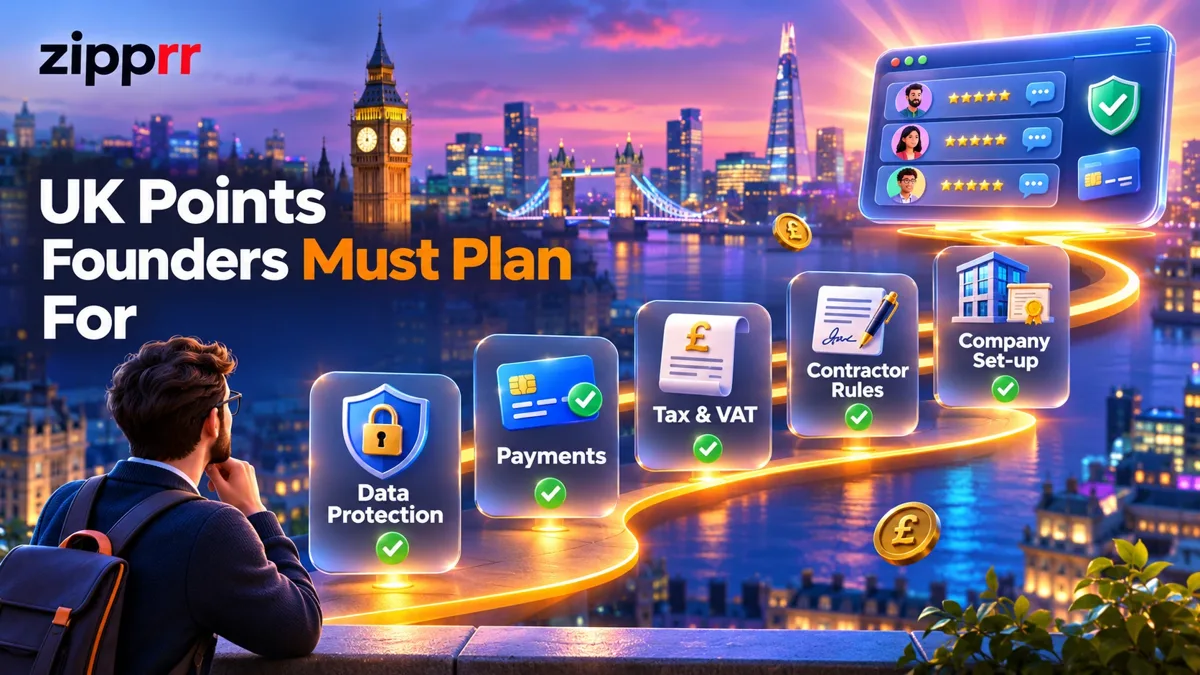
Launching in the United Kingdom is attractive because of its large community of independent professionals and a business culture that values clear contracts. Also, a few practical topics deserve attention early, and a solicitor or accountant can confirm the details for your situation. This section is general information, not legal advice.
The encouraging news is that none of these points depends on which route you choose. In addition, they shape your operating model, so settle them in parallel with the technology decision.
When you are ready to look at product details, this overview of the product decisions worth settling before launch covers the choices that most affect your user experience.
What does a sample first-year budget look like for each route?
Numbers help decisions. Moreover, below are three sample first-year budgets for a UK niche marketplace, all hypothetical and rounded. Replace them with your own quotes.
Build from scratch
Buy as-is
Buy and customise
The gap between the first and the other two is the budget that can fund your launch marketing, your first hundred freelancers and the support you give them. For most new marketplaces, the supply side and the demand side are the true bottleneck, not the code.
Which mistakes can you avoid with any route?
Founders who succeed tend to avoid the same handful of pitfalls. Furthermore, each is easy to sidestep once you know it.
- Building every feature before launch. Start with the core loop of post, bid, fund, deliver and release, then grow from there.
- Choosing a niche that is too wide. "Freelancers for everything" competes with giants. "Freelance bookkeepers for UK creative agencies" has a clear promise.
- Ignoring supply first. A marketplace with no freelancers disappoints the first client. Recruit your first fifty providers before you invite buyers.
- Underinvesting in trust. Verified profiles, clear refund rules and visible reviews persuade hesitant clients.
- Locking yourself into someone else's code. Insist on source code ownership so you keep your options open.
A strong launch plan treats technology as one pillar among several. If you want help planning the audience side, this go-to-market plan for attracting your first clients and freelancers gives you a practical sequence to follow.
What does a sensible 30-day decision plan look like?
You can settle the build, buy or customise question in a month. This plan keeps you moving without rushing.
At the end of the month, you will have numbers, a shortlist and a decision you can defend. That clarity is worth more than any single feature.
Take the next step with a free demo
Share your niche, country and budget.
Seeing the product working is the quickest way to judge fit. Bring your Founder Fit Test scores to make the conversation faster and the recommendation sharper.
Explore the ready-made freelance marketplace software with projects, bids and escrow while you decide.
Frequently asked questions
Is it cheaper to buy or build a freelance marketplace platform in the UK?
Buying is usually far cheaper at the start. Besides, a ready-made platform can start from $490 as a one-time payment, while a custom build commonly runs into tens of thousands of pounds before launch. Customising a purchased platform sits in the middle, letting you pay only for the features that differentiate you.
How long does it take to launch a freelance marketplace platform?
A purchased platform can go live in one to three weeks once branding and installation are done. Likewise, a purchased platform with custom features often takes four to ten weeks. Also, a full custom build commonly takes five to nine months, depending on team size and scope. These are planning ranges, and your timeline depends on your scope.
What features does a freelance marketplace platform need on day one?
Launch with project posting, bids and proposals, milestones, escrow, messaging, profiles, reviews, dispute handling and an admin dashboard. These cover the full journey from hiring to payment. In addition, extra features such as advanced matching or certifications can follow once real users show you what they value most.
How does escrow work on a freelance marketplace platform?
The client funds a milestone before work starts, and the platform holds that money safely. Moreover, the freelancer delivers the work, the client reviews it, and approval releases payment to the freelancer. If there is disagreement, a dispute process lets an admin review the evidence and decide how the funds are distributed.
Do I own the source code if I buy a freelance marketplace platform?
With Zipprr, yes. Furthermore, the platform includes full source code ownership, so you can host it where you like, extend it with any developer and avoid per-transaction fees to a vendor. Besides, always confirm ownership terms in writing with any supplier before you pay.
Can I customise a ready-made freelance marketplace platform?
Yes, and customising is often the smartest route. Because you receive the source code, a developer can add your own verification steps, badges, fee structures or workflows. Likewise, start with the standard flow, launch, and then fund customisations based on feedback from your first real users.
What does a freelance marketplace need to comply with in the UK?
Common topics include UK GDPR and the Data Protection Act 2018 for personal data, UK payment services rules for holding client money, and HMRC guidance on VAT. Requirements depend on your model, so speak with a UK solicitor or accountant before launch. This is general information, not legal advice.
How do freelance marketplaces make money?
Most charge a service fee on each completed project, usually as a percentage taken from the freelancer, the client or both. Also, others add paid memberships, featured listings or premium verification. In addition, many founders begin with a simple percentage fee, then introduce extra income streams once the marketplace has steady activity.
Should I launch with a mobile app or a website first?
A responsive website is the best first step for most freelance marketplaces, because clients and freelancers often work on laptops. Add iOS and Android apps once usage grows and users ask for them. Moreover, zipprr's $890 Pro plan includes mobile apps and app store submission when you are ready.
What is the best way to get my first freelancers and clients?
Recruit freelancers first, from a community you already know, such as former colleagues, professional groups and niche forums. Furthermore, then invite a small group of clients with real projects to post. Besides, personal outreach beats broad advertising at this stage, because early trust matters more than early volume.