

- Trusted Marketplace Solution
Launch Your Own P2P Rental Script Without Building From Scratch
Zipprr’s P2P rental script is ready-made P2P rental marketplace software. It covers listings, bookings, payments, messaging, wallet and admin tools. Own the full source code. Book a free demo to see it live.
One-time payment · Full source code · Lifetime license · iOS + Android (Pro plan) · 7-day refund

★★★★★
Trusted by Marketplace Founders
P2P Rental
Script
Script
Marketplace Platform
Owners
Bookings
Payments
Wallet
Listings
Renters
Messaging
Analytics
Tools
Cameras
Equipment
Tools
Cameras
Party Equipment
Electronics
Sports Gear
Bikes
Drones
Instruments
Medical
Tools
Cameras
Party Equipment
Electronics
Sports Gear
Bikes
Drones
Instruments
Medical
- P2P Rental Script Results
The rental marketplace script trusted by 500+ businesses
Production-ready and engineered for growth. From your first listing to a thriving community of owners and renters across 10+ industries.
0
+
Businesses launched on the platform, spanning tools, cameras, events, medical and heavy equipment.
0
+
Countries served
0
+
Industries served
0
+
Years of experience
$
0
One-time, from
0
d
Purchase to live
Trusted across 10+ industries
- RentFlowHQ
- LendCircle
- GearShare
- RentNest
- HireHub
- BorrowBay
- LeaseLoop
- How the Rental Marketplace Works
How Your P2P Rental Script Makes Money, End to End
From the first listing to your first payout. A frictionless flow your owners and renters love, and that pays you a commission on every single transaction.
9:41Owner
Create a listing
Listing titlePro DSLR Camera Kit
Price / day$28
CategoryCameras
9:41Renter
Search rentals nearby
Mountain Bike0.5 mi
$20DSLR Camera Kit0.8 mi
$289:41Booking
Select rental dates
SMTW
TFS
1234567
891011121314
15161718192021
22232425262728
Oct 12–14 · 3 days$84
9:41Wallet
Wallet balance
$3,842
▲ +$1,240 this month
$
Payout readyCommission auto-deducted
New booking +$84
Owner payout $1,240
STEP 01
Owners list assets
Publish a listing in minutes — photos, daily price and availability. You approve what goes live.
STEP 02
Renters discover & request
Search by location, filter by category and book nearby — demand finds your listings on its own.
STEP 03
Bookings auto-confirm
Day-wise bookings calculate duration, validate availability and take payment — held in escrow until return.
STEP 04
You earn & get paid
Your commission is deducted automatically on every booking. Owners withdraw their share; you keep your cut.
You earn on every booking — automatically
Set your commission rate once and the platform collects your cut on every transaction, in every category, around the clock. Owners self-serve withdrawals from their wallet.
- Why Choose This Rental Script
Why This P2P Rental Script Works - For Your Business and Your Users needs
The core capabilities that make this a complete, revenue-ready platform out of the box — no assembly required.
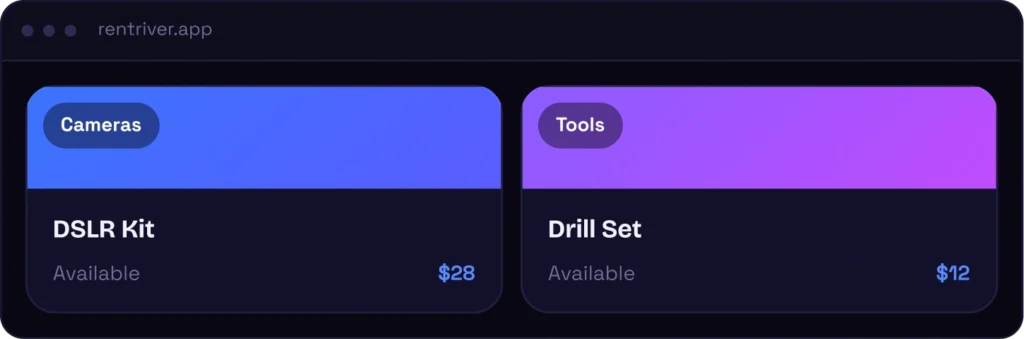
Rent almost any item — tools, cameras, party gear, electronics, sports equipment and more.
One flexible platform for every rental category your community can imagine, under your own brand.
Monetise unused assets
Turn idle belongings into recurring income for everyone on the platform.
Local community rentals
Location-aware, neighbourly sharing.
Flexible day-based pricing
Renters pay only for the days they need.
Real-time messaging
Owners and renters stay aligned before, during and after a booking.
Automated commission
Earn on every booking, deducted at checkout.
Secure wallet with owner withdrawals & smart discovery
Earnings collect in a protected wallet owners withdraw on demand, while location-aware search surfaces the most relevant items nearby.
App Submission on Pro
The Pro plan includes Android, iOS and app store submission.
Server Installation
We handle deployment for you.
Multi-Language
Serve users in their language.
Post-launch Support
90 days free expert assistance.
Transparent Pricing
No hidden or surprise charges.
- Rental Marketplace Software
The 10 Core Systems Inside Our P2P Rental Marketplace Software
Ten production-ready systems power your peer-to-peer rental marketplace from day one. Listings, bookings, payments, wallet, commissions and an admin panel. No add-ons, no upgrades, no monthly unlocks: you own the full rental marketplace software source code outright.
Booking Automation
Real-time availability, conflict-free calendars, instant confirmations and automated reminders. Day-wise and hourly rentals run themselves — no manual back-and-forth.
Secure Payments
PCI-compliant checkout with security deposits held in escrow and released automatically on return.
Owner Wallet
Earnings collect in a wallet owners withdraw on demand.
Commission Engine
Set your rate and earn on every booking, automatically.
Messaging
Real-time owner–renter chat inside every booking.
Search & Discovery
Location-based search and nearby product discovery across every category.
Analytics & Reports
Live dashboards for revenue, occupancy, commissions and your top-performing listings.
Vendor Management
Onboard, KYC-verify and manage every owner and their listings from one place.
Multi-Category Rentals
One codebase for equipment, vehicles, cameras, property, tools and any asset you list.
Admin Controls
Run the entire marketplace from one operator console — every user, listing, transaction and payout under your control.
Users & KYC
Listings
Bookings
Payouts
Commissions
Reports
CMS & Settings
See the P2P Rental Marketplace Software Live in a Free Demo
Book a free 30-minute walkthrough of the bookings, payments, wallet and admin tools. Get answers on pricing, customization and launch time from our team.
- Full source code
- Lifetime ownership
- From $490 · 7-day refund
- P2P Rental Script Explained
What is a P2P rental script?
A P2P rental script, also called P2P rental marketplace software, is ready-made software for peer-to-peer rentals. It runs on the sharing economy model. Owners list items. Renters search, book and pay online. You earn a commission on every booking.
Zipprr’s version includes listings, day-wise booking, secure payments, an owner wallet and an admin panel. You also own the full source code.
It closes the gap between a rental business idea and working software. It accepts bookings, processes payments and delivers earnings to asset owners, without a development team building it from scratch.
Zipprr’s script arrives as a complete, self-contained codebase covering every operational layer, each pre-integrated and tested before delivery.
1
Item scheduling engine
Live availability with conflict-free bookings.
2
Payment holding reserve
Funds held neutral until the rental closes.
3
Two-sided identity screening
Document-verified owners and renters.
4
Operator control dashboard
Run the whole marketplace from one panel.
- How the Rental Marketplace Works
Explore P2P Rental Marketplace Categories You Can Launch
Start with one niche or run many. This P2P rental marketplace software handles tools, cameras, party supplies, sports gear, electronics and heavy equipment under one codebase.

- Explore Products →
Construction Equipment
Heavy Equipment

- Explore Products →
Videography Equipment
Gear

- Explore Products →
Medical Equipment
Mobility

- Explore Products →
Gym Equipment
Recovery & Fitness

- Explore Products →
Agricultural Equipment
Machinery

- Explore Products →
Home & Tools

- Explore Products →
Photography Equipment

- Explore Products →
Manufacturing Equipment

- Explore Products →
Event & Party Equipment
- Peer-to-Peer Rental Platform
A Powerful Peer-to-Peer Rental Marketplace Platform
Explore the rental marketplace script’s building blocks grouped by what they do. Marketplace core, search and discovery, messaging, payments, security and admin. Every feature is included and ready to go.
Marketplace core
- Peer-to-peer rental marketplace
- Multi-user platform
- Community-based sharing economy
- Product rental listings
- Product owner & user profiles
- Marketplace commission model
- Local rental marketplace
- Day-wise rental pricing
- Rental availability management
Search & discovery
- Intelligent location-based search
- Nearby product discovery
- Category browsing
- Keyword search
- Product detail pages
- Product & location filtering
Messaging
- Real-time messaging
- Direct owner–renter communication
- Booking-related conversations
- Chat history
- Instant communication
Payments
- Secure online payments
- Multiple payment gateways
- Booking payments
- Commission deduction
- Owner payouts
- Transaction management & history
- Booking receipts
Security
- Secure authentication
- Protected transactions
- User authorization
- Role-based access
- Secure payment flow
- Activity logging
Notifications
- Booking notifications
- Payment notifications
- Withdrawal notifications
- Messaging notifications
- Admin alerts
- Owner & Renter Dashboards
Owner & renter dashboards, one seamless marketplace
Whether listing an item or renting one, every role gets a purpose-built journey. Roles included: Administrator, Product Owner, Renter.
Product Owner
Owner journey
Owner dashboard
A central hub to run every listing and rental at a glance.
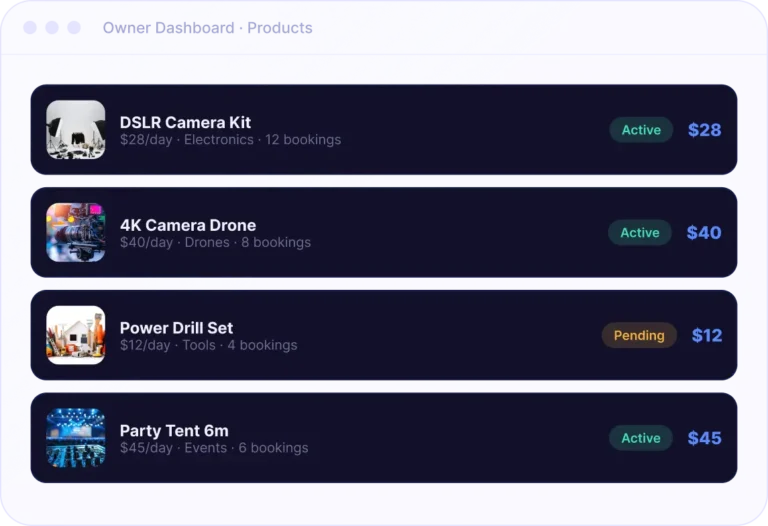
Product management
Create, organise and maintain every item you rent out.
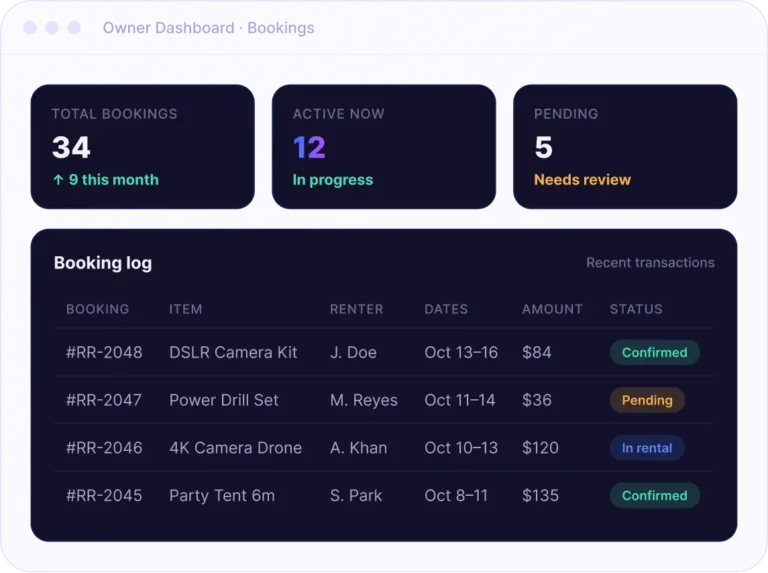
Rental booking management
Track and handle each incoming rental from one place.
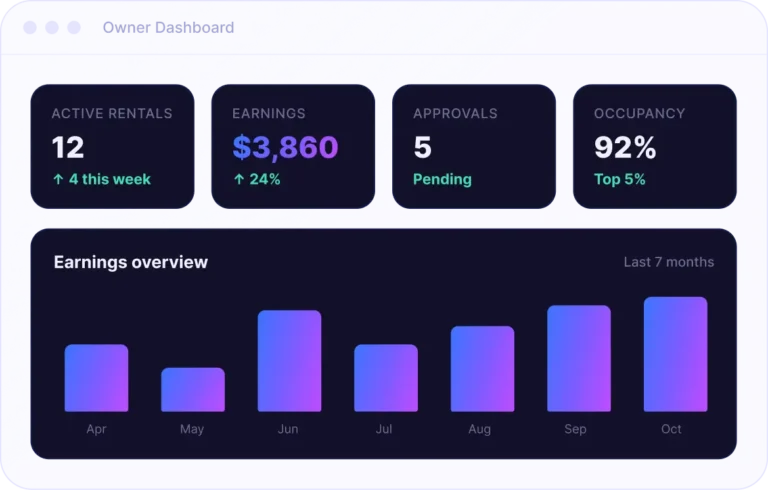
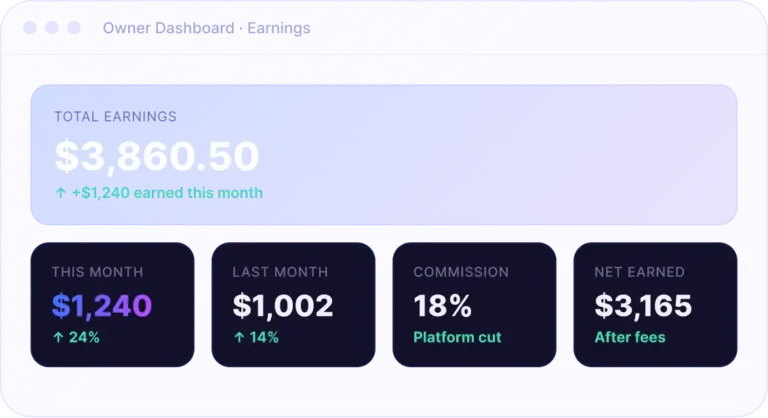
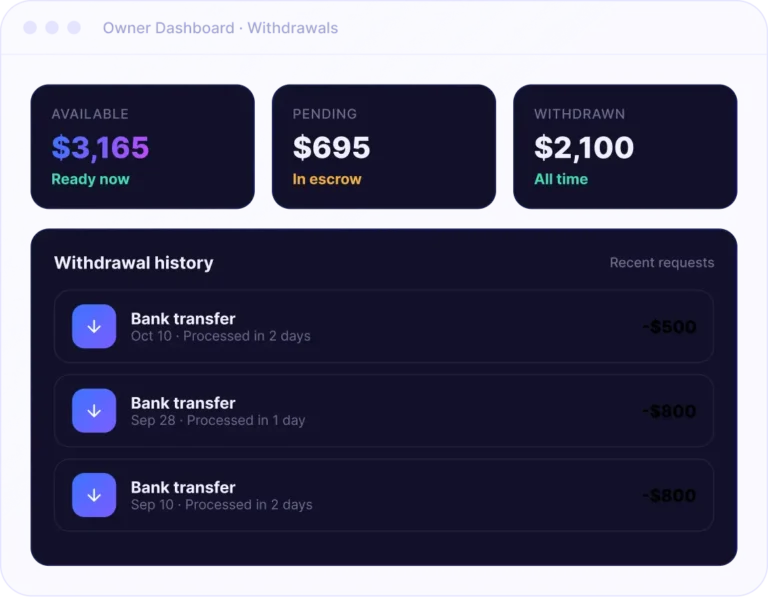
Earnings overview
See exactly what you’re making across all bookings.
Booking approvals & availability
Approve requests and keep your calendar accurate.
Listing performance
Understand which items perform best for you.
Withdrawal requests
Cash out earnings straight from your wallet.
Renter
Renter journey
Browse available products
Explore everything on offer in your area.
Book rental items
Reserve the days you need in a few taps.
View booking status
Follow every booking from request to return.
Rental history
Revisit everything you’ve rented over time.
Payment management
Handle payments and receipts with ease.
Message product owners
Chat directly to coordinate pickups and questions.
Manage bookings
Adjust, track and cancel bookings on your terms.
- Rental Script Feature List
The Full rental script feature catalog
Every capability included with the script, organised by module. Expand any group to see what’s inside.
Marketplace Features
10 capabilities
Multi-category listingsSearch & filters
Location-based searchFeatured listings
Category managementOwner profiles
Renter profilesReviews & ratings
WishlistNotifications
User & Account
10 capabilities
User registrationSecure login
Profile managementUser dashboard
Account settingsIdentity/profile information
Rental historyBooking history
Transaction historyWishlist/Favorites
Product Listing
12 capabilities
Photo uploadPricing per day/hour
Availability calendarCategory selection
Location taggingItem description
Listing statusDelivery options
Deposit settingsFeatured toggle
Listing analyticsBulk upload
Booking System
10 capabilities
Day-wise bookingHourly booking
Instant confirmationBooking requests
Availability checkConflict prevention
Auto remindersBooking extensions
Cancellation policyReturn management
Payments & Wallet
16 capabilities
Stripe integrationPayPal integration
Escrow paymentsAuto payout
Commission deductionRefund management
Deposit handlingWallet top-up
Withdrawal requestsTransaction history
Invoice generationTax management
Multi-currencyPayment receipts
Dispute resolutionBank transfer
Admin Panel
14 capabilities
User managementListing moderation
Booking oversightRevenue dashboard
Commission settingsCategory management
Payout managementDispute handling
Analytics reportsNotification control
CMS pagesSEO settings
Email templatesSystem settings
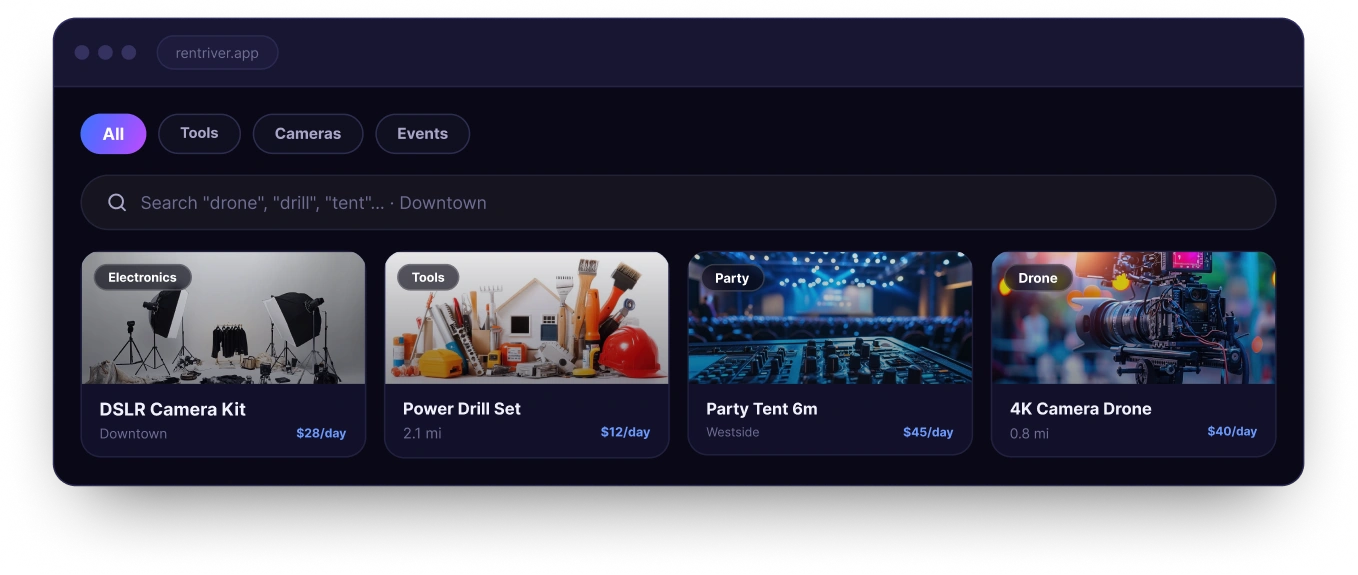
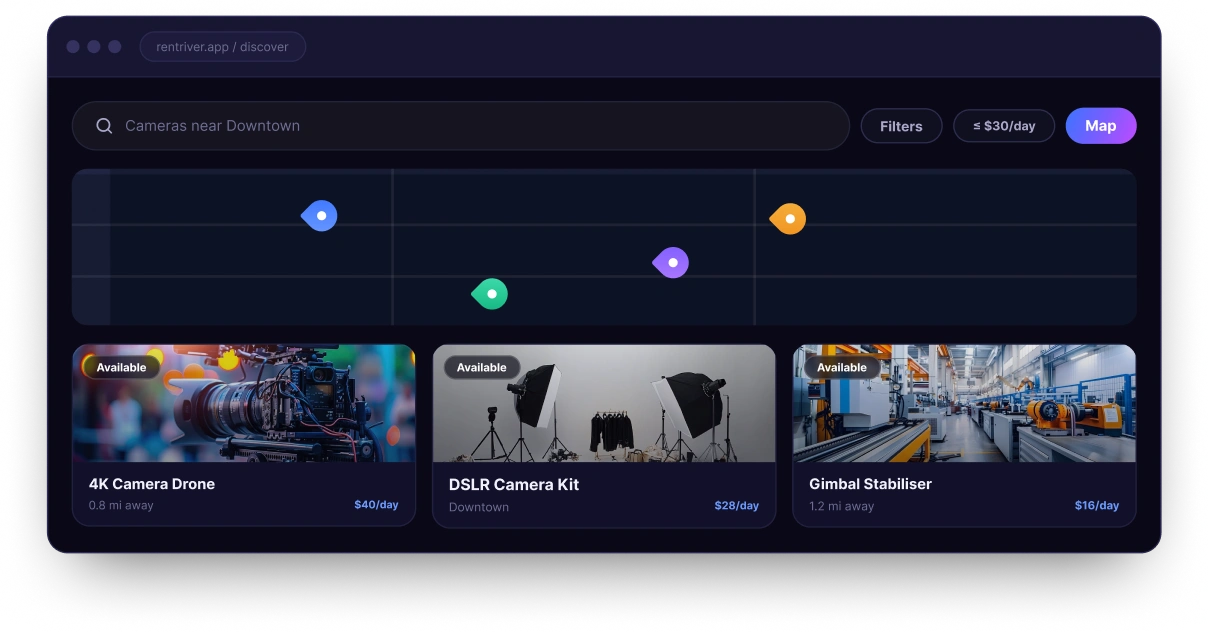
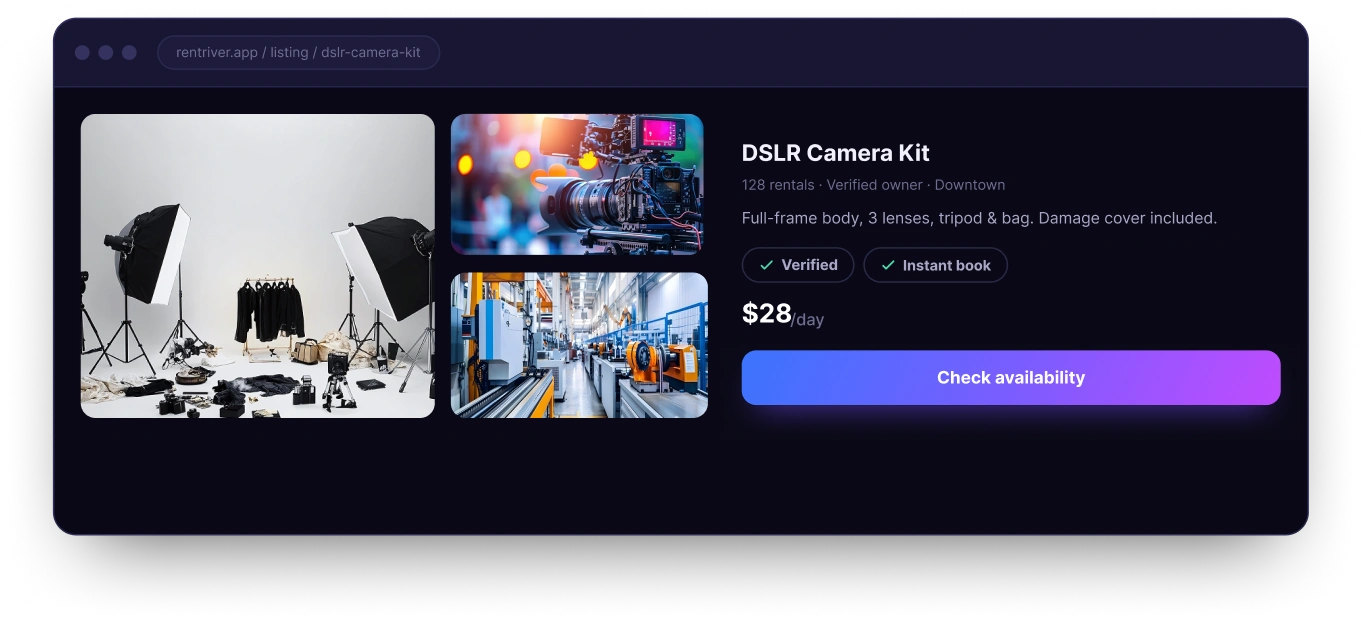
- Inside the Rental Marketplace App
Inside the rental marketplace app - every screen
From the public marketplace to checkout and the admin console. Click through the actual interfaces that ship in the box.
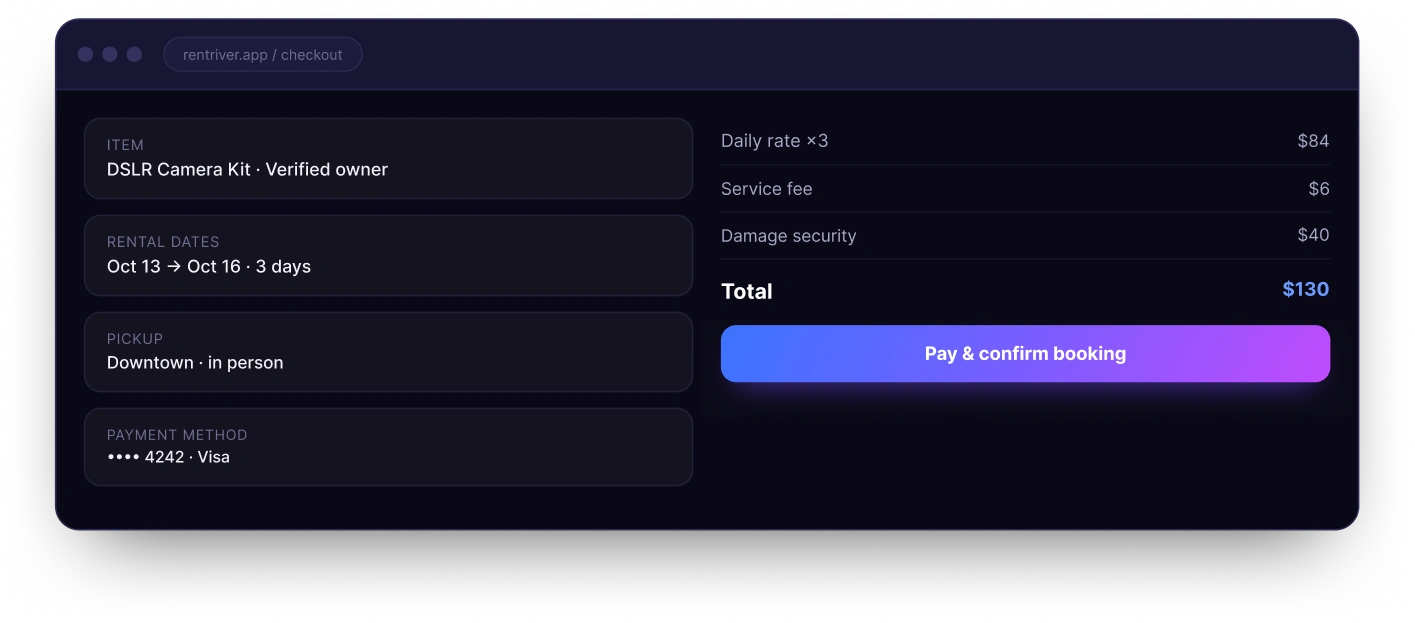
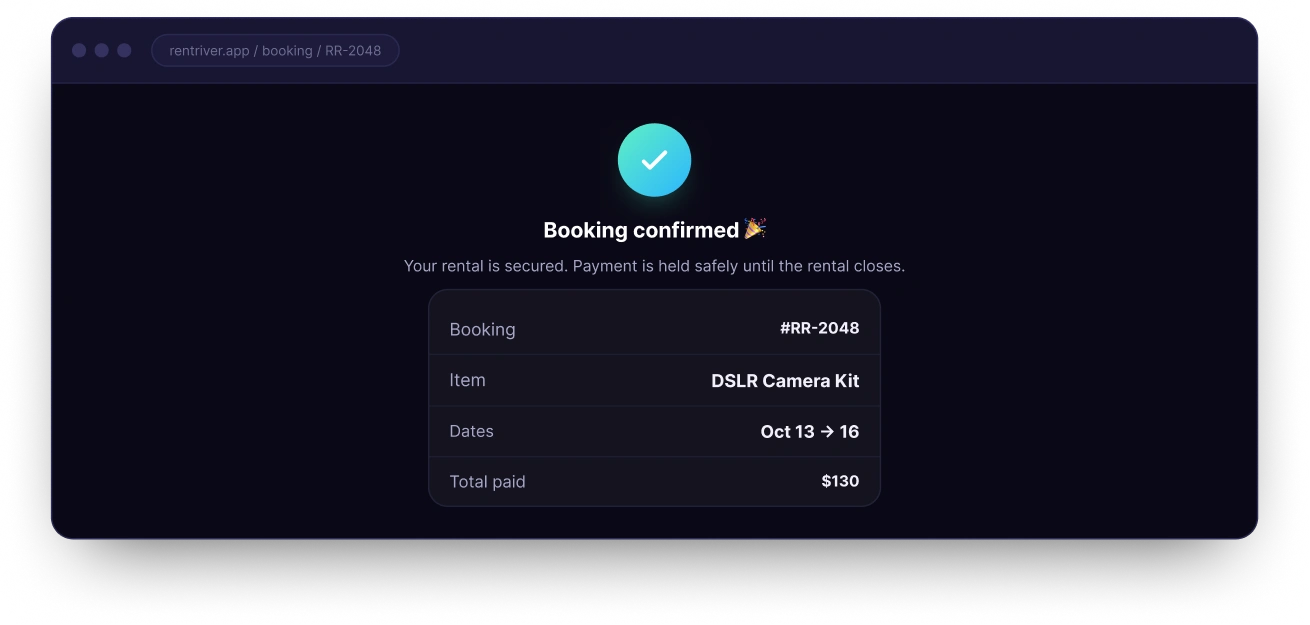
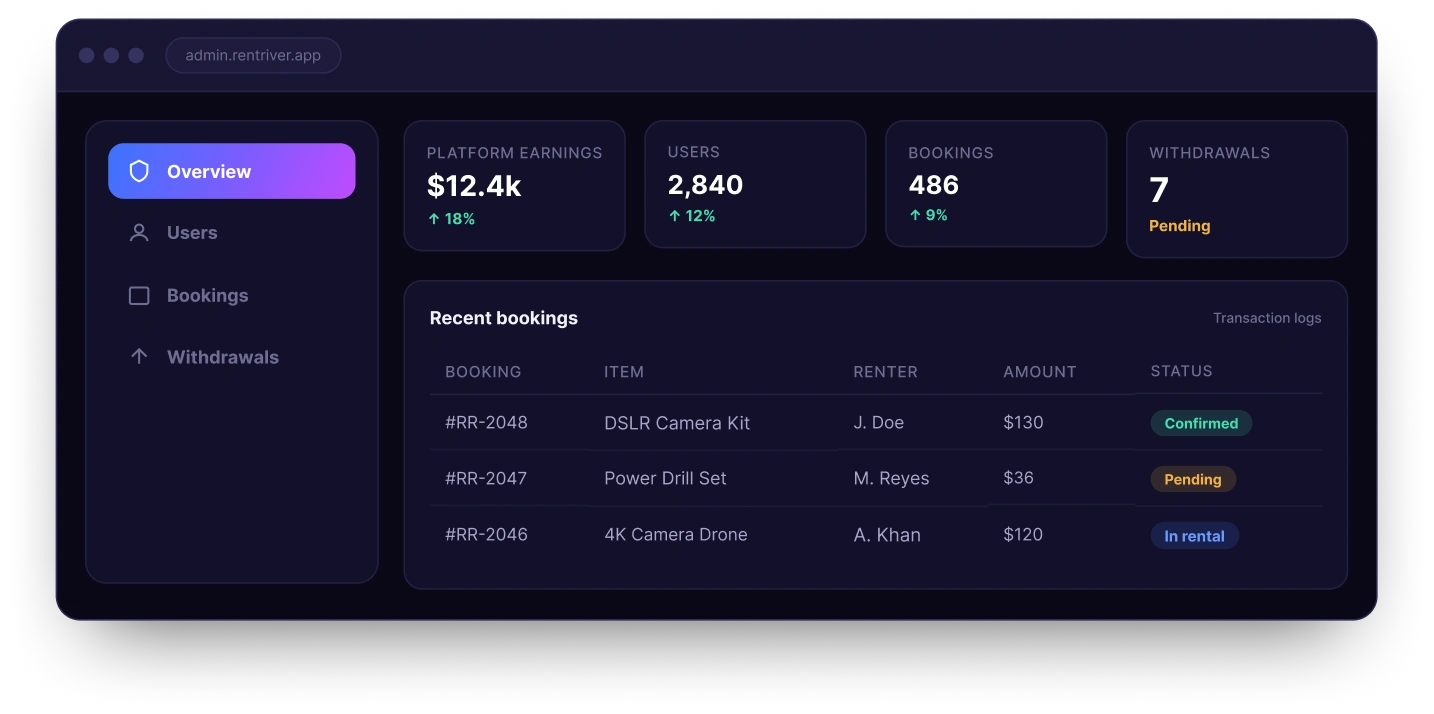
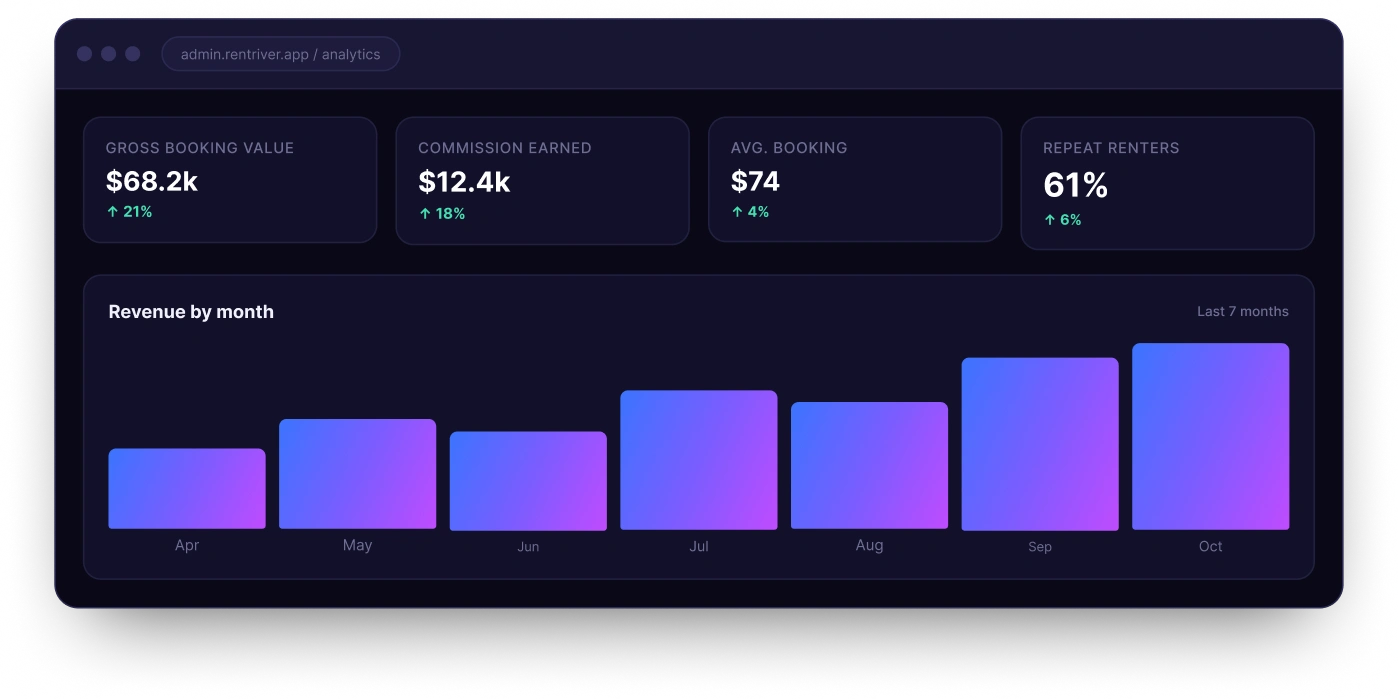
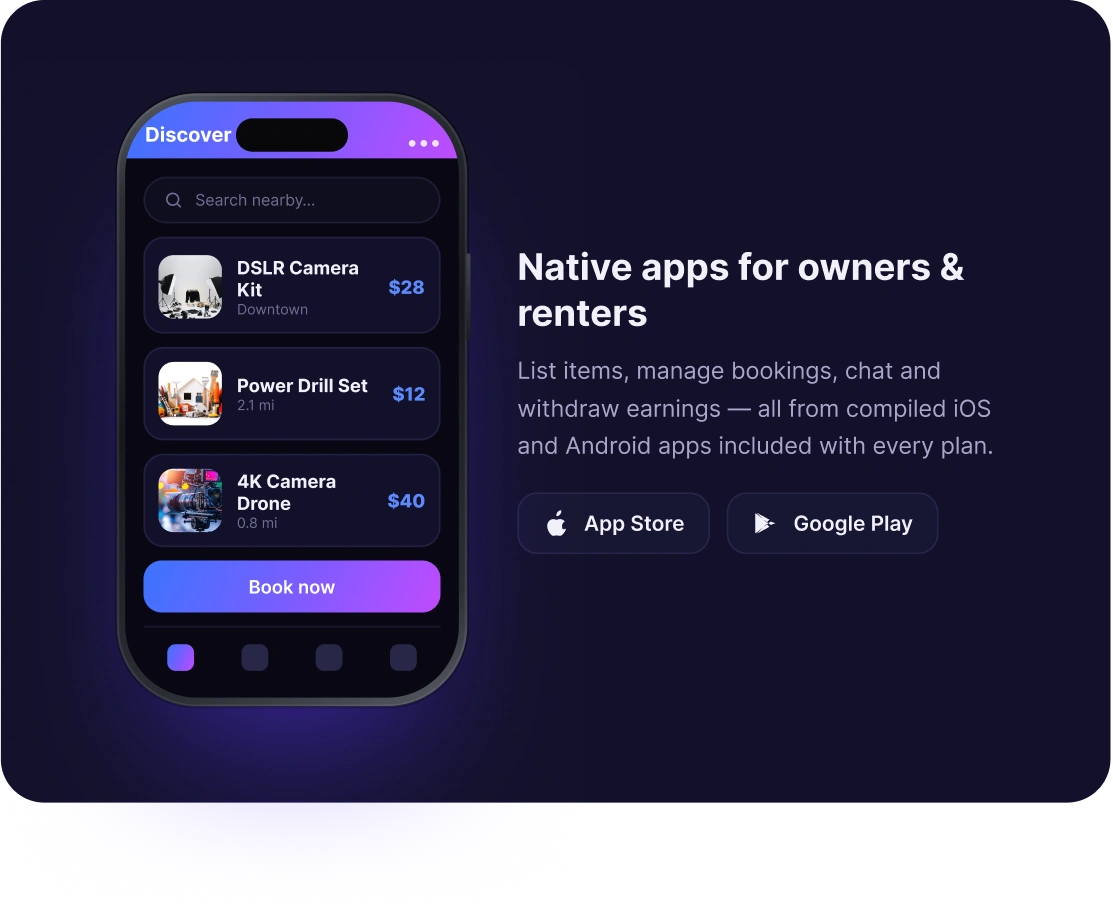
- Rental Booking Software
Rental booking software done right
From the public marketplace to checkout and the admin console. Click through the actual interfaces that ship in the box.
- Rental Transaction Lifecycle
How a P2P Rental Marketplace Works From First Listing to Final Payout
From the public marketplace to checkout and the admin console. Click through the actual interfaces that ship in the box.
step 01
The owner publishes a listing
After identity screening, the owner fills a guided form with photos, pricing tiers, a drag-selectable availability calendar, and a damage security amount calibrated to the item’s value.
Each submission enters a moderation queue before going live, giving the operator a review checkpoint.
step 02
Discover, chat & book
Renters search by name, category, location or open date and land on listing pages with pricing, verified badges, condition images and a live calendar.
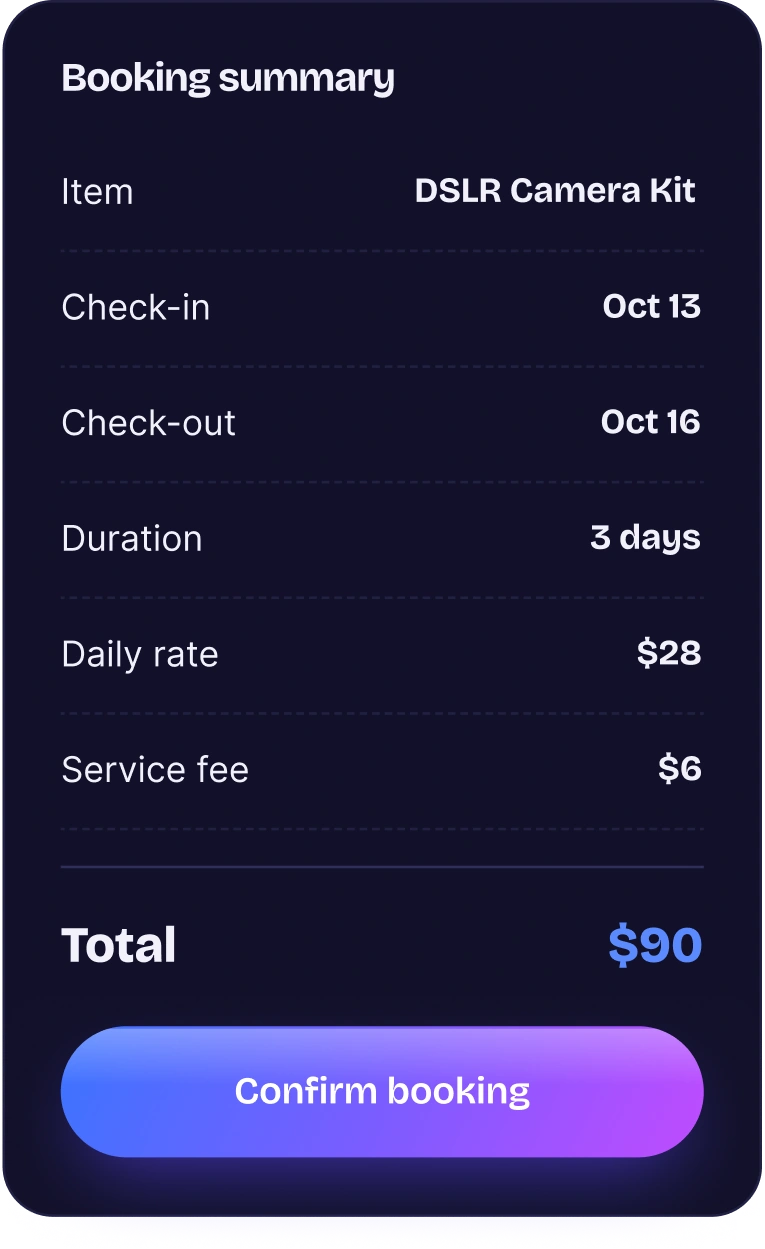
Checkout shows a full cost summary – base charge, service fee and tax – before payment.
step 03
Pay securely & settle
Payment captured at checkout moves into a platform-held reserve for the full rental window. Neither party can access it, which removes the most frequent trust failure in P2P rentals.
At close, the system deducts commission and makes the owner’s balance available for withdrawal on demand.
- Rental Wallet & Payouts
A secure rental wallet that pays owners
Earnings collect automatically and owners withdraw whenever they like — with full tracking on every cent.
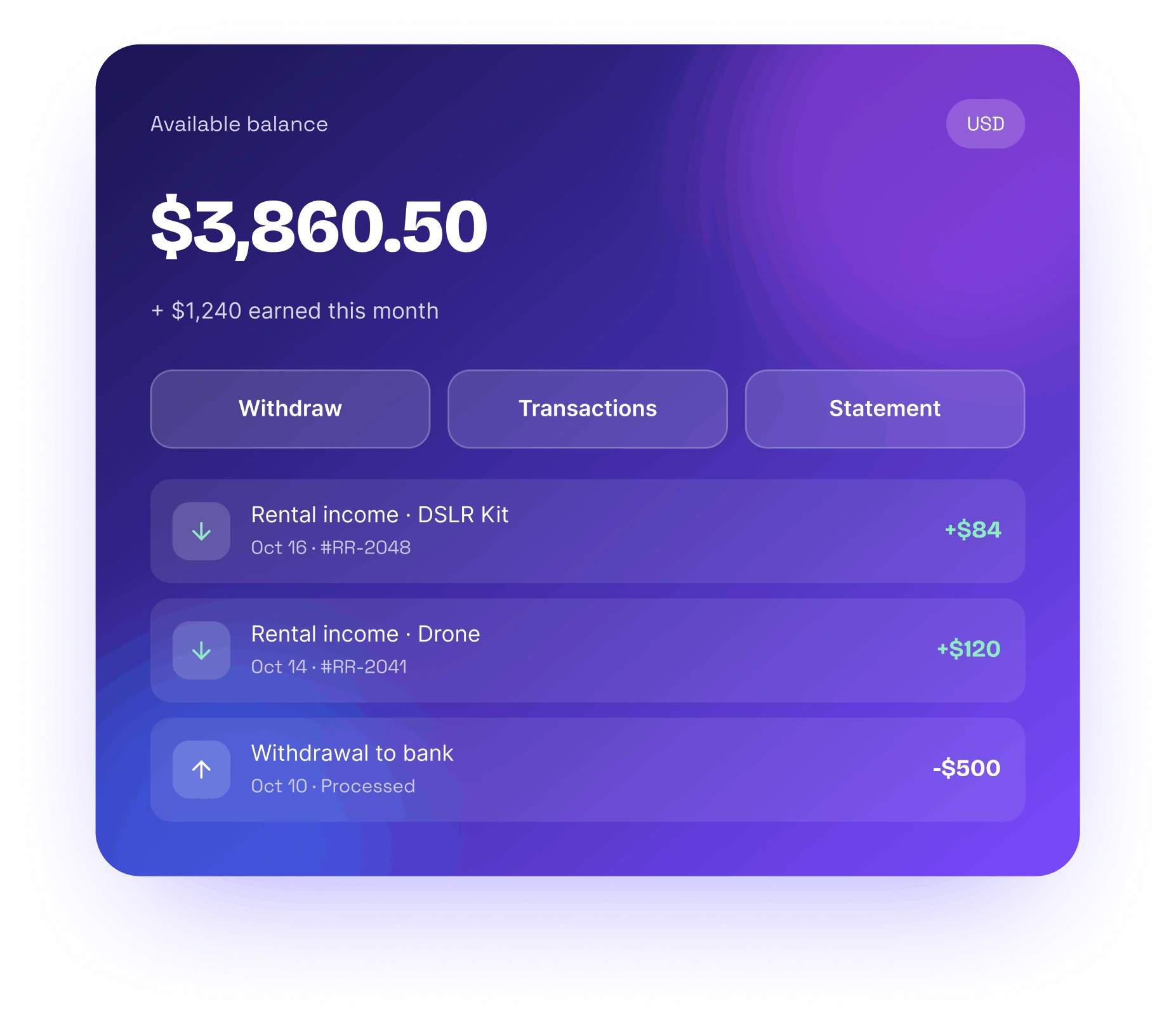
Secure wallet
A protected wallet keeps every owner’s earnings safe with full wallet balance visibility.
Earnings & income tracking
Earnings management, rental income tracking and commission tracking in one ledger of wallet transactions.
Withdrawals on demand
Built-in withdrawal management handles withdrawal requests end to end.
- Rental Owner Dashboard
The owner dashboardcommand center
Everything an owner needs to manage listings, bookings and earnings from a single screen.
- Rental Admin Panel
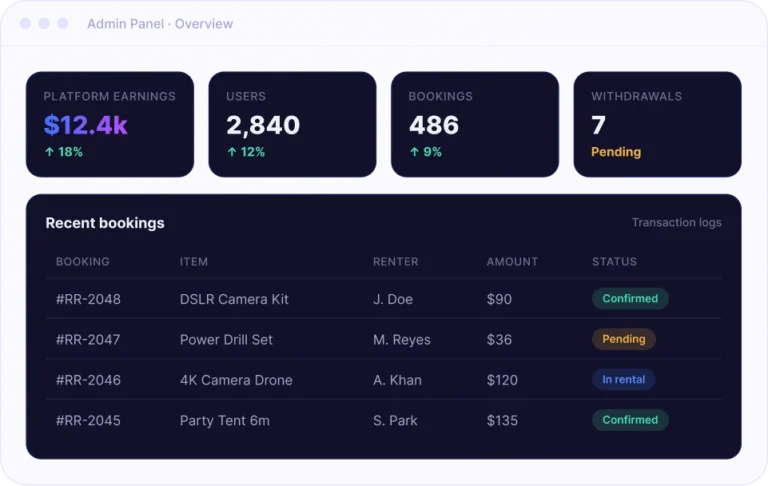
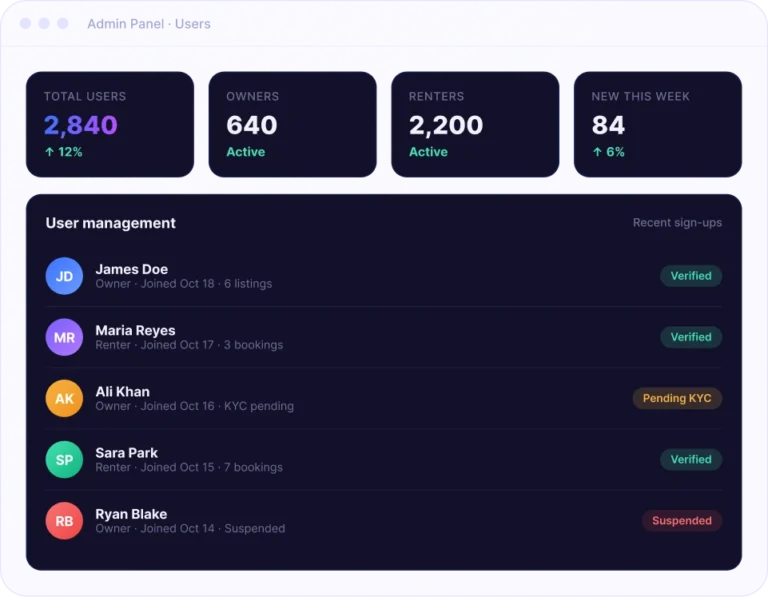
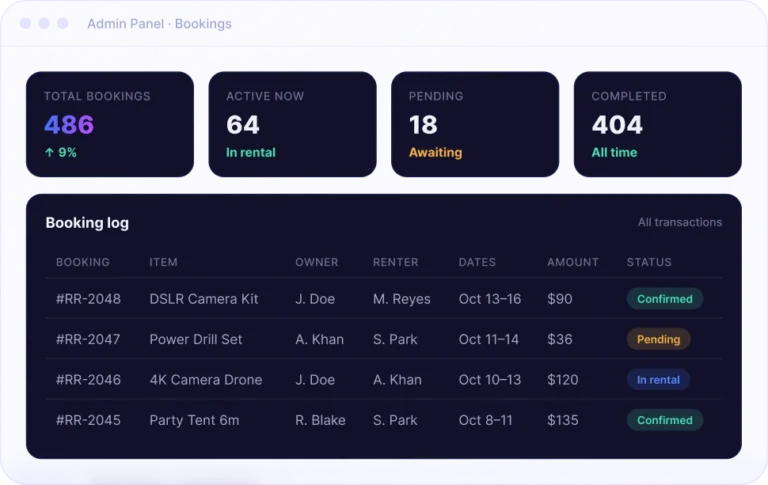
Total control with therental admin panel
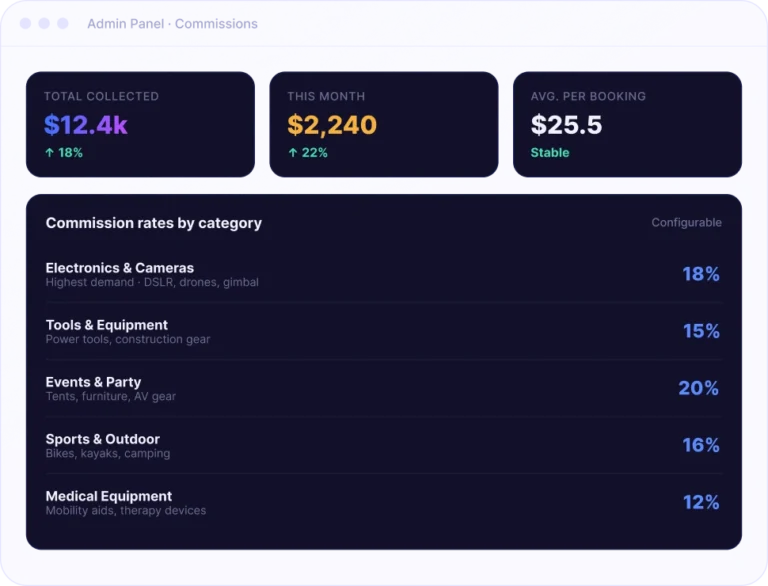
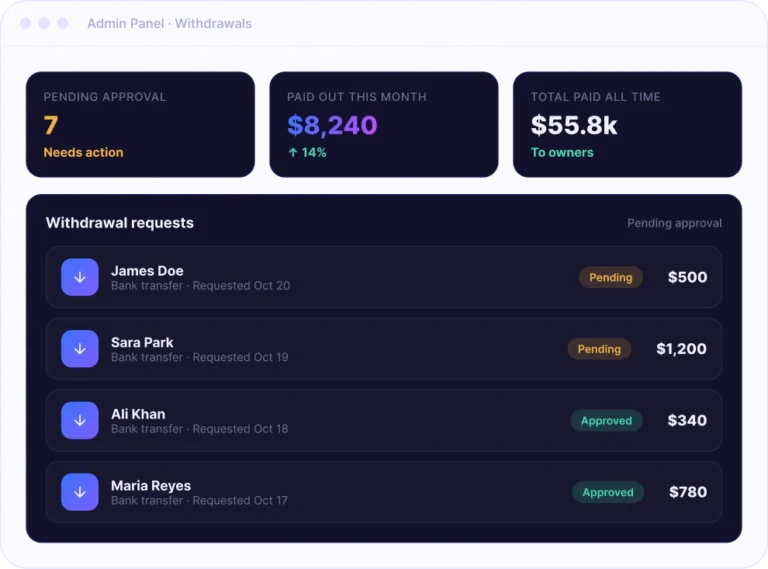
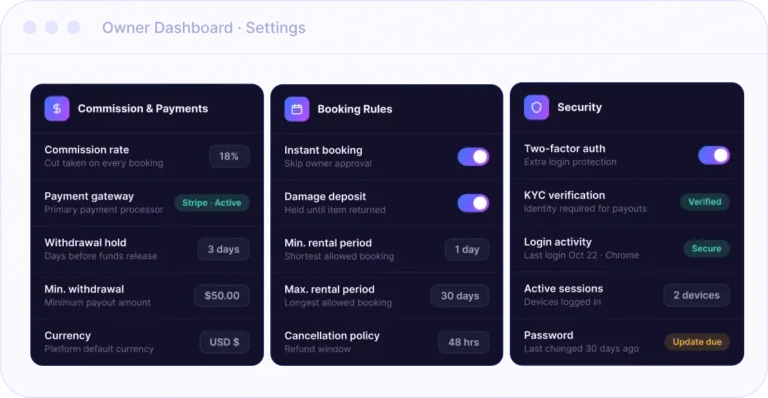
The rental marketplace admin panel manages users, listings, bookings, commissions, payouts and platform settings. The entire peer-to-peer rental platform from one operator console.
- Rental Commission & Revenue
Earn commission onevery rental booking
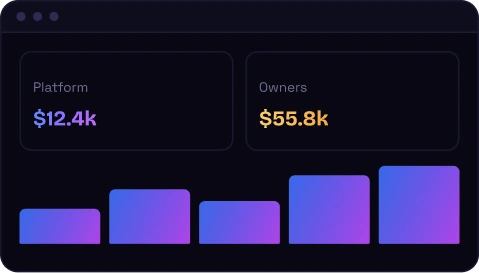
A commission-based revenue engine, built into the P2P rental script, that grows your platform earnings on every rental booking while owners keep their share.
Automated commissions
A configurable cut is taken from every booking the moment it’s paid — with commission configuration in your hands.
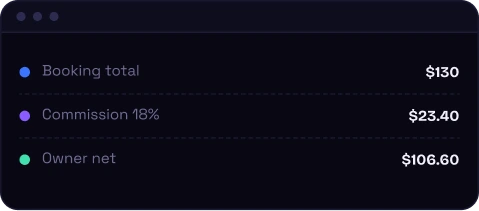
Platform & owner earnings
Track platform earnings and owner earnings separately with clear, real-time splits.
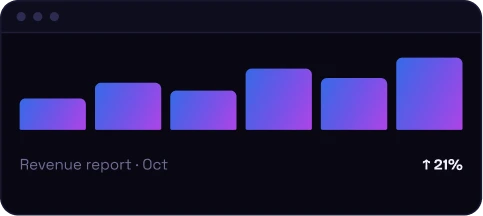
Reports & financial tracking
Built-in revenue reports and financial tracking keep your numbers crystal clear.
Renter pays
Booking payment
Commission split
Auto-deducted
Owner wallet
Withdraw anytime
- Rental Script Tech Stack
A rental marketplace script on a modern stack
A scalable, secure foundation ready for production from day one.
PHP 8.x support
Runs on the latest, fastest PHP for performance and longevity.
Modern responsive UI
A clean, mobile-first interface that looks great on every device.
Scalable architecture
Built to grow with your community without re-platforming.
Multi-gateway payments
Plug in multiple processors for flexible, global payments.
Real-time messaging
Instant owner–renter communication that keeps deals moving.
Location-aware search
Surface the most relevant nearby items automatically.
Secure wallet infra
Hardened wallet handling for balances, earnings and payouts.
Production-ready
Security, roles and logging built in for a confident launch.
- Why Launch Now
Why the rental economy rewards platforms thatlaunch in 2026
Peer-to-peer rental has gone from niche idea to proven model, and 2026 is its breakout year. Top platforms earn big just by connecting owners with renters, without ever owning a thing. It’s lean, scalable, and community-driven.
The timing has never been better. People favor access over ownership, and everyday owners are eager to turn unused items into income. Building supply naturally from day one.
⚡ Why it works
Anyone can list an item in minutes and reach local renters instantly, removing friction for both sides.
- Access over ownership is now the default consumer preference.
- Flexible day-wise pricing makes listing an idle item effortless.
- Owners are eager to monetise idle assets, building supply fast.
- Multi-Category Rental Script
P2P Rental Marketplace for Multiple Rental Businesses
The table below maps the specific coordination challenge each industry faces. And how a purpose-built two-sided marketplace engine resolves it.
| Rental Vertical | Specific Coordination Problem the Platform Resolves |
|---|---|
| Construction & Heavy Equipment | Fleet-level unit tracking, deposit amounts that scale to asset value, and delivery-window scheduling for machines that require transport rather than renter pickup. |
| Photography & Videography Gear | Sub-day booking granularity for cameras, lenses and lighting rigs where a standard 24-hour rate creates overlapping availability gaps and owner-renter conflicts. |
| Medical & Mobility Equipment | Document-based authentication before any wheelchair, nebuliser or hospital bed is confirmed, limiting access to screened individuals in health-sensitive categories. |
| Events & Celebration Supplies | Multi-item checkout that bundles tent, furniture, AV and staging into one booking with a single delivery window rather than separate reservations per item. |
| Agricultural & Farming Machinery | Season-length availability locks and harvest-period pricing tiers for tractors and harvesters that reflect extended-use economics, not single-day tool rentals. |
| Home Improvement & Power Tools | Postcode-based proximity search surfacing drills, sanders and pressure washers within practical travel distance, converting neighbourhood idle assets into income. |
| Gym & Recovery Equipment | Concurrent support for pay-per-session bookings and monthly recurring rental subscriptions on the same listing, letting owners choose the income model. |
| Technology & Consumer Electronics | Condition-state photo logging at each handover, creating a visual baseline that resolves post-rental damage claims with documented evidence. |
- Multi-Category Rental Script
Which Rental Marketplace Should You Launch? Pick the Right Zipprr Script
This P2P rental marketplace software fits general peer-to-peer rentals such as tools, cameras, party supplies, sports gear and electronics. For a focused niche, choose the Zipprr script built for it.
| Rental Business | Best Zipprr Fit |
|---|---|
| Heavy and construction equipment | Equipment Rental Script |
| Tools, cameras, party supplies, sports gear and electronics | This P2P rental marketplace software |
| Peer-to-peer car rental | Turo Clone or Car Rental App Development |
| Venue and space rental | Space Rental Script |
| Robot rental | Robot Rental Script |
| Vacation homes and stays | Airbnb Clone, Vacation Rental App Development or Hostelworld Clone |
| Learn how a P2P rental platform is built | Peer-to-peer rental marketplace architecture case study |
- Included in the Rental Script
Every rental marketplace feature included Nothing held back.
Every function below is live and configurable from your first day. No capability locked behind a higher tier, a separate implementation, or a monthly add-on.
01
Item Scheduling & Reservation Engine
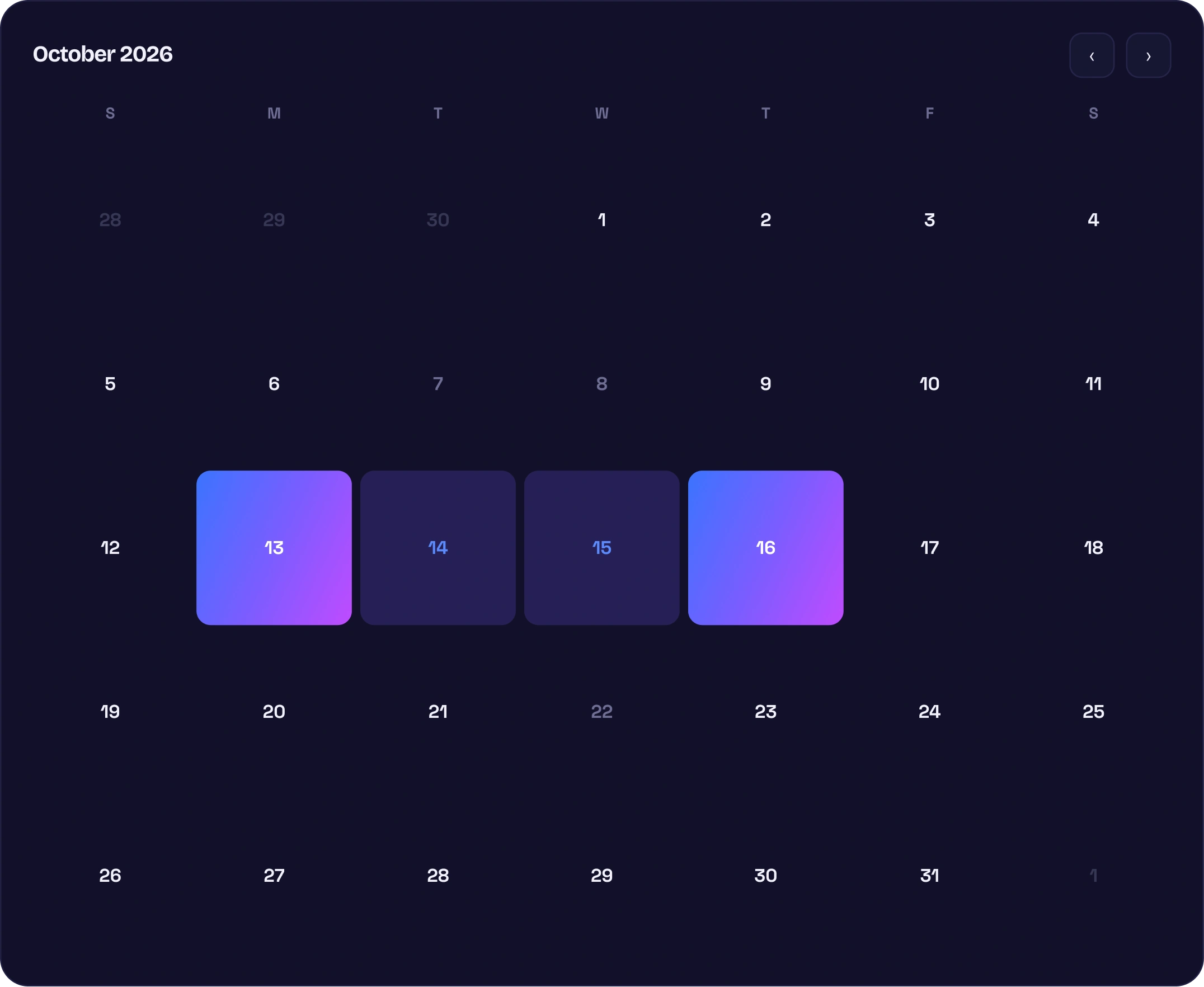
Renters select dates against a live calendar drawn from actual availability. Each reservation moves through submitted, approved, active, returned and settled with automated notifications.
02
Day-Wise Rental Pricing & Availability
Owners set a daily rate per listing and manage availability on a live calendar; the system calculates each rental total by duration automatically at checkout.
03
Payment Reserve & Multi-Channel Processing
Payments route to a platform-held reserve until both parties confirm. Supports Stripe, PayPal, Razorpay and nine additional regional processors configurable from the dashboard.
04
Document-Based Identity Screening
Every owner and renter completes profile verification with a government ID and an automated check. With a visible verified badge on cleared accounts.
05
Archived Communication Thread
All exchanges occur in the native chat where each message carries a timestamp, verified sender and permanent link to its booking. Retrievable against its booking at any time.
06
Category-Level Commission Config
Assign separate commission percentages per category, running simultaneously. Extraction is automatic at earnings release, crediting the owner’s net and recording the operator’s share.
07
Revenue Reporting & Earnings Ledger
A filterable real-time view of gross booking value, commission and payouts, exportable to CSV. Plus a per-owner ledger breaking down every booking.
08
Booking Status Tracking & History
Every booking moves through requested, confirmed, active, returned and cancelled, with full booking, transaction and rental history retained for owners, renters and admin.
09
Proximity-Based Map Discovery
Google Maps integration plots every active listing as a pin on an interactive map. The map redraws as renters reposition or adjust filters. It surfaces nearby inventory that text search misses.
10
Owner Withdrawal & Payout Routing
Operators configure withdrawal channels. Bank wire, digital wallets, transfers — and owners submit requests from their balance, each status-tracked through pending, processing and transferred.
- Launch Your Rental Marketplace
Launch your rental marketplace inunder 30 days
An equivalent custom build takes 24–36 weeks at $70,000–$150,000. Zipprr’s team handles server setup and environment prep, and on the Pro plan also handles app store submissions. You receive a tested, live marketplace.
Purchase & code transfer
Day 1
Complete payment
Licence activated, codebase transferred, orientation call scheduled.
Server preparation
Days 2–3
Submit hosting credentials
Full application stack installed, security certificate configured, environment verified.
Operator setup
Days 3–5
Specify categories, rates, channels
Dashboard live, payment processors integrated, visual branding applied.
App store submission (Pro)
Days 5–7
Supply developer account access
iOS and Android builds submitted to App Store and Google Play.
Controlled soft open
Week 2
Bring first listings on
Domain serving live, test transactions processed, initial listing published.
Public opening
Weeks 3–4
Start marketing
Store approval confirmed, unrestricted transaction volume active.
- Ready-to-Use Rental Features
Built-In Tools That Keep Every Rental Booking on Track
- Identity Verification Management
- Day-Wise Booking
- Transaction Logs & Earning Reports
- Commission Setup
- Real-Time Messaging
- Withdrawal Method Setup
- Booking Request Management
- KYC-Linked Profile System
- Secure Wallet System
- Support Ticket System
- Map Integration
- P2P Rental Script Pricing
P2P Rental Script Pricing & Plans
- Not happy with our product? Get a 100% refund within 7 days. Choose your plan with confidence — risk-free.
Standard
Get essential features, all in one place
$490
- 100% Source Code
- Website Installation
- 90 Days Support
- Regular Updates
- One Time Payment
- Android App
- IOS
- App Submission
Most Popular
Pro
Launch your business app fast, with everything done-for-you
$890
- 100% Source Code
- Website Installation
- 90 Days Support
- Regular Updates
- One Time Payment
- Android App
- IOS
- App Submission
- Buy vs. Subscribe
Why a One-Time Rental Script Can Be Better Than a SaaS Subscription
A subscription billed at $499 monthly costs $17,964 over three years for software you never own. Zipprr’s script is a one-time business asset between $490 and $890 — the full codebase transfers to you at delivery.
Custom Development
$70k–$150k
24–36 weeks · you rebuild everything
VS
Zipprr Rental Script
$490–$890
Live in under 30 days · you own it
| Buying Criterion | Zipprr P2P Rental Script | Subscription Alternatives |
|---|---|---|
| Payment model | ✓ Single purchase: $490 or $890 | ✕ Recurring: $299–$999 monthly |
| Code access | ✓ Full codebase at purchase | ✕ No code, vendor-hosted only |
| Business continuity | ✓ Zero risk, you own the asset | ✕ Lapse cancels the platform |
| Smartphone apps | ✓ iOS and Android included in the Pro plan | ! Separate purchase or not offered |
| App store submission | ✓ Pro plan, Zipprr manages it | ! Buyer-managed or paid add-on |
| Modification rights | ✓ Unlimited via owned code | ! Restricted to platform settings |
| Three-year total cost | ✓ $490–$890 one time | ✕ $10,800–$36,000 in fees |
| Post-delivery support | ✓ 90 days at no extra charge | ! Paid tier or community only |
| Purchase protection | ✓ 7-day full refund guarantee | ✕ Most offer no software refunds |
- Get Started
Launch Your Marketplace Business With Zipprr
Book a personalized demo and discover how Zipprr helps you launch a fully customizable marketplace solution built for growth.
Can we customize the platform?
Yes, every solution can be tailored to your business.
-
100% Source Code Ownership
Complete control from day one
-
Custom Branding
Your logo, colors and identity
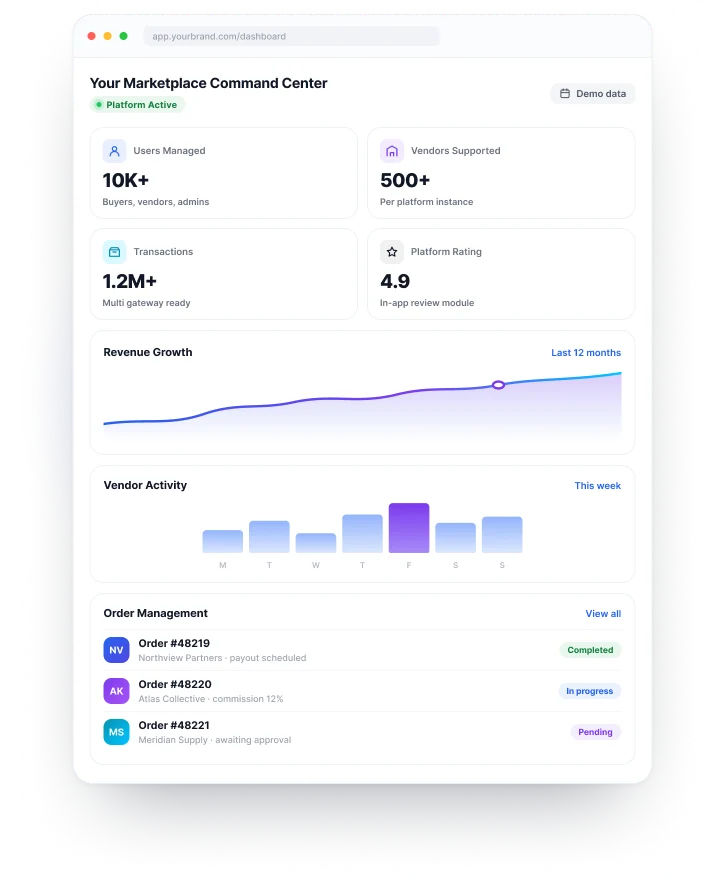
-
Multi Vendor Ready
Manage sellers, roles and payouts
-
Built To Scale
Grow without limits
- 30 Minute Product Walkthrough
Request Your Free Demo
Book a personalized demo and discover how Zipprr helps you launch a fully customizable marketplace solution built for growth.
- 100% source code ownership
- Custom feature discussion
- Free product consultation
- 90 days launch support
- P2P Rental Script FAQ
P2P rental scriptquestions, answered
Each answer addresses a real decision point rental marketplace founders reach before committing to a software investment. Not generic copy assembled to fill a template.
What is a P2P rental marketplace?
A P2P rental marketplace is an online platform where owners list items for rent. Other users (renters) search, book and pay to use them for a set period. Zipprr’s P2P rental script provides the ready-made software to run this kind of marketplace under your own brand. It includes listings, bookings, payments and identity verification.
How much does Zipprr's P2P rental script cost?
Zipprr’s P2P rental marketplace software costs $490 for the Standard plan and $890 for the Pro plan, both as a one-time payment. You get 100% source code, website installation, 90 days of free support and regular updates. Android and iOS apps with app store submission are included in the Pro plan. There are no recurring license fees.
What is the best P2P rental script?
The best fit depends on how you want to own and run the platform. Zipprr’s P2P rental script suits founders who want 100% source code, a one-time payment from $490 and no monthly license fee. No-code SaaS builders can launch quickly, but they usually charge a recurring fee and keep the code with the provider.
How much does it cost to build a P2P rental marketplace?
A custom build typically takes 24 to 36 weeks and costs $70,000 to $150,000, based on Zipprr’s own estimate. Zipprr’s ready-made P2P rental marketplace software starts at a one-time $490 (Standard) or $890 (Pro) with full source code, so you skip most of that build cost. Hosting and payment processor fees are extra.
Can I build a rental marketplace like Airbnb for tools, cameras or party supplies?
Yes. Zipprr’s P2P rental marketplace software uses the same two-sided model. Owners list items with day-wise pricing, renters book and pay online, and you earn a commission on every booking. It supports multiple categories such as tools, cameras, party supplies, sports gear and electronics in one platform.
What features should a P2P rental script have?
Core features include listings with photos and pricing, and an availability calendar with conflict-free booking. You also need secure payments with deposit handling, an owner wallet with withdrawals, in-app messaging, reviews and identity verification. A commission engine and an admin panel complete the set. Zipprr’s P2P rental marketplace software includes all of these.
Does the P2P rental script include mobile apps?
Yes, the Pro plan ($890) includes native Android and iOS apps for both renters and item owners, plus app store submission. The Standard plan ($490) covers the website and full source code. The apps support real-time booking, push notifications via Firebase, in-app messaging, and payments.
How do I make money with a P2P rental script?
You earn through booking commissions (10-30% per transaction), owner subscription plans ($25-$120/month), listing fees ($2-$30 per listing), promoted listing charges, and interest on security deposits. Zipprr’s script lets you configure all these revenue streams from the admin dashboard without coding.
Can I customize the P2P rental script after purchase?
Yes, buyers receive full source code ownership, so you can customize categories, commission rates, payment gateways, and design without restriction. Non-technical changes like pricing rules and categories are configurable through the admin dashboard, while deeper customization is possible since there’s no vendor lock-in.
How long does it take to launch a rental app?
Launching with Zipprr’s P2P rental script typically takes 1-2 weeks for setup and payment integration, plus app store submission on the Pro plan. A soft launch of 2-4 weeks follows. You get the complete source code, full installation help and 90 days of free support throughout.
Is the P2P rental script a one-time purchase or subscription?
Zipprr’s P2P rental script is a one-time purchase for $490, not a subscription. You own the complete source code permanently, receive 90 days of free support, and only cover your own hosting (roughly $20-$100/month) and payment processor fees. There’s no recurring license fee or revenue share to Zipprr.
What rental business types can I start with this P2P rental script?
You can launch rental marketplaces for construction equipment, cameras and videography gear, event supplies, medical and mobility devices, agricultural machinery, home improvement tools, gym equipment, and electronics. The script’s category system adapts to almost any physical asset that people rent short-term.
How does the script prevent double bookings?
The script uses a real-time availability engine that locks item calendars the moment a booking is confirmed, blocking overlapping reservations automatically. Owners see live conflict alerts, and renters only see genuinely available dates, eliminating double-booking errors without manual calendar management.
How does identity verification work for renters and owners?
Both renters and owners verify identity with a government ID and an automated verification check, shown as a verified badge on cleared accounts.
What payment gateways does the P2P rental script support?
Zipprr’s P2P rental script supports Stripe, PayPal, Razorpay, and other regional payment processors, so you can accept payments in multiple currencies depending on your market. Payments are held in escrow until bookings complete, protecting both the renter and the item owner.
Do I need coding skills to run a rental marketplace?
No coding skills are required to operate the platform day-to-day. Categories, commission rates, payment methods, and admin roles are all managed through a visual dashboard. Coding knowledge is only useful if you want to make advanced custom modifications beyond the built-in settings.
How are disputes between renters and owners resolved?
Disputes are resolved using structured evidence records: timestamped messages, booking history, and uploaded damage documentation tied to each reservation. Held security deposits fund resolution, and admins review the documented trail to make a fair decision instead of relying on one-sided claims.
What do I get when I buy Zipprr's P2P rental script?
For a one-time $490 payment (Standard), you get the complete source code. You also get full booking, payment and verification features, installation on your server and 90 days of free technical support. There are no ongoing fees. The $890 Pro plan adds native iOS and Android apps with app store submission.
What support is included after buying the rental script?
Every purchase includes 90 days of free technical support and full installation on your server. On the Pro plan, support also covers app store submission, including resubmissions if Apple or Google reject the app. Zipprr also offers a seven-day refund guarantee if the platform doesn’t perform as described.
How does a P2P rental platform work?
An owner lists an item with pricing and availability, a renter finds it through search or browsing, sends a booking request, and pays through the platform. Funds are held neutral until the rental closes, the item is used and returned, and both sides can leave a review. Zipprr’s script handles each of these steps — listing, booking, payment, and review — through the owner and renter dashboards.
Can I own the source code of my rental app?
Yes. Every Zipprr P2P rental script purchase includes the complete source code, so your platform has no ongoing dependency on Zipprr to keep running.
What is the difference between a P2P rental script and a SaaS rental platform?
A SaaS rental platform is typically a subscription service where the underlying code stays with the provider and customization is limited to what the platform allows. A P2P rental script like Zipprr’s is a one-time purchase. You receive the source code directly. Customization is not limited to platform settings, and there is no recurring subscription fee.
If your rentals are vacation stays, Zipprr’s Airbnb clone script is built for that model.
Can I create multiple rental categories?
Yes. The P2P rental script supports multiple rental categories, allowing you to organize different types of items and services within the marketplace. Admins can manage categories and listings, making it easier for renters to discover and book the items they need.
Can I launch a vehicle rental marketplace with this script?
The script’s built-in rental categories are tools, equipment, cameras, events, and similar items. Vehicles aren’t one of the categories today. If you specifically need a vehicle rental marketplace, Zipprr’s Car Rental App Development and Turo Clone products are built for that use case. Contact our team if you’d like to discuss adapting this script for vehicles as a custom build.
Can owners set their own rental prices?
Yes. When an owner lists an item, they set its price and availability directly. As described above in how the platform works.
Own your rental marketplace script. Not a subscription.
Buy the P2P rental script once, own the source code for life, and keep 100% of every booking. No monthly fees, no revenue share, no lock-in. Launch your rental marketplace this month.
- Full source code
- Lifetime ownership
- From $490 · 7-day refund