


Why New Freelance Marketplaces Struggle to Grow
Launching a freelance marketplace looks deceptively simple. Demand for remote work is global, talent is abundant, and success stories like Upwork make the opportunity feel proven. Yet most new freelance platforms struggle to gain traction long after the product is built.
Understanding an Upwork-Like Freelance Marketplace Model
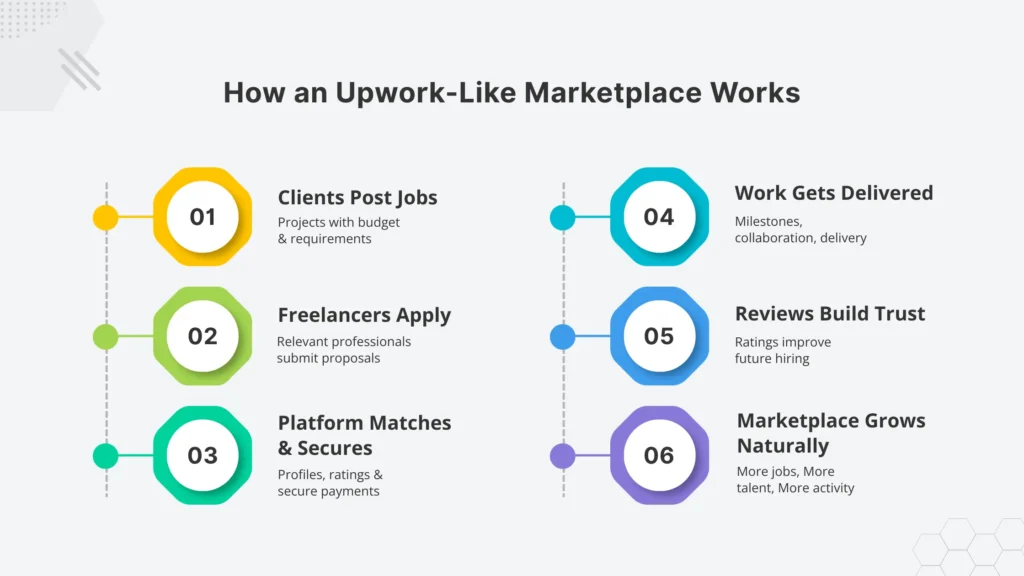
- Freelancers, who create profiles, bid on jobs, deliver work, and build reputation.
- Clients, who post projects, review proposals, hire talent, and make payments.
- Platform operators, who manage matchmaking, payments, dispute resolution, and growth.
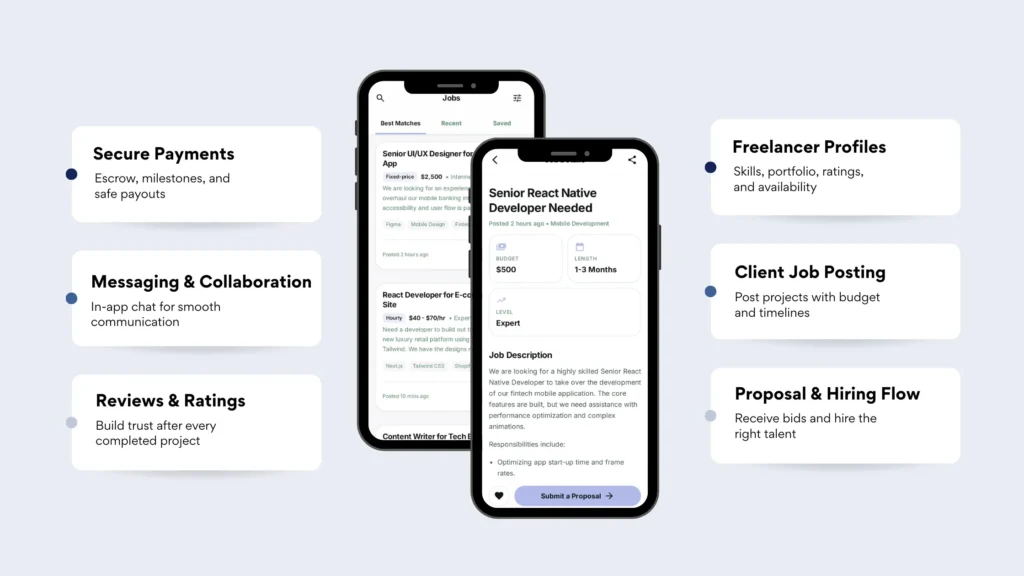
A task marketplace script can use this same two-sided marketplace structure to connect customers with skilled professionals while supporting job postings, proposals, communication, and transactions.
- They focus on a clear segment early (industry, geography, or skill set).
- They reduce friction in the hiring and onboarding process.
- They invest heavily in trust mechanisms such as reviews, verified profiles, and secure payments.
Benefits of Using an Upwork-Like App for Founders
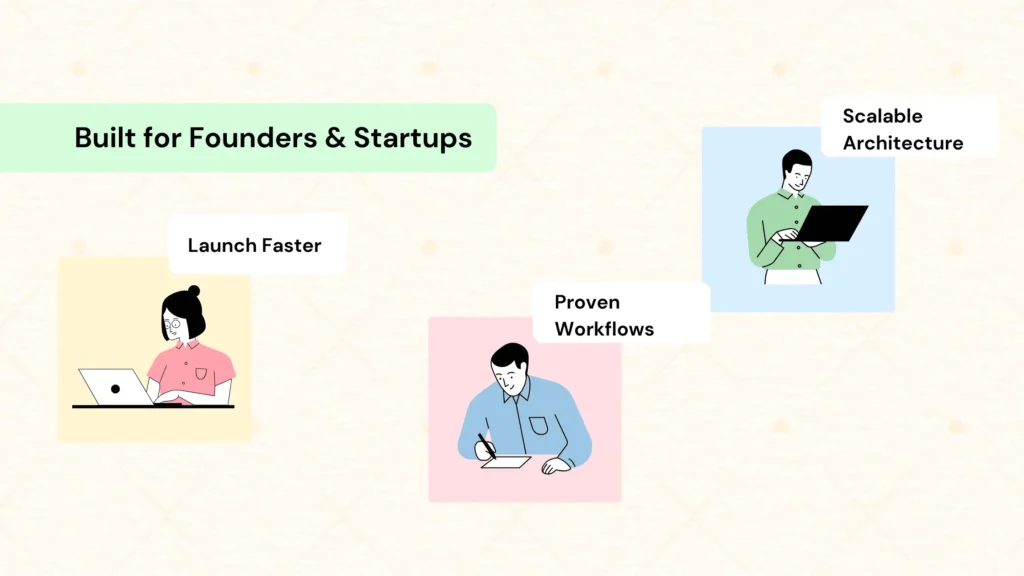
A fiverr clone script can support a similar niche-focused approach by helping entrepreneurs build specialized freelance marketplaces around specific skills, services, or target audiences.
These are important freelance app development considerations, particularly when evaluating the balance between development effort, marketplace functionality, trust systems, monetization, and future scalability.
Solving the Chicken-and-Egg Problem in Freelance Marketplaces
- Guaranteed or curated jobs posted by the platform or partners.
- Invite-only client launches to ensure quality demand.
- Pre-vetted talent pools that signal quality to early clients.
This focused approach is particularly useful for fiverr like platform scaling, where expanding into new categories or markets works better after establishing strong activity in an initial niche.
User Acquisition Strategies for Freelancers and Clients
- Direct outreach to startups, agencies, or local businesses.
- Partnerships with bootcamps, accelerators, or professional communities.
- Thought leadership content that positions the platform as an expert in a specific niche.
Marketing and Growth Tactics That Actually Work
- Freelancer intent (e.g., “remote UX design jobs”)
- Client intent (e.g., “hire Shopify developer”)
For ai freelance marketplace apps, these scalable acquisition strategies can be combined with intelligent matching and personalized recommendations to connect clients with relevant talent more efficiently.
Monetization, Payments, and Trust as Growth Levers
- Commission-based fees on completed projects.
- Subscriptions for freelancers or clients.
- Hybrid models combining both
Why Most Upwork-Style Platforms Fail—and How to Avoid It
Most Upwork-style platforms fail for predictable reasons. They launch too broadly, rely heavily on paid ads, and underestimate the effort required to build trust and liquidity.
- Define a narrow niche and ideal user.
- Seed one side intentionally.
- Ensure early users succeed.
- Build trust before scaling ads.
- Optimize for retention before expansion