


Menu

How to Create a Delivery Robot Rental Website That Makes Money

Table of Contents

The global shift toward automation is no longer a futuristic experiment—it is a daily operational reality. In 2026, businesses across food delivery, healthcare, and retail are adopting autonomous delivery robots to combat rising labor costs and the inefficiencies of “last-mile” logistics.

The robot rental business 2026 opportunity is growing because companies can access automation without the high upfront cost of purchasing and maintaining their own fleets.

However, the real goldmine isn’t necessarily in manufacturing these robots; it’s in the digital infrastructure that connects them to businesses. By building a delivery robot rental marketplace, entrepreneurs can tap into a recurring revenue model that offers high scalability with remarkably low operational risk.

What is a Delivery Robot Rental Website?
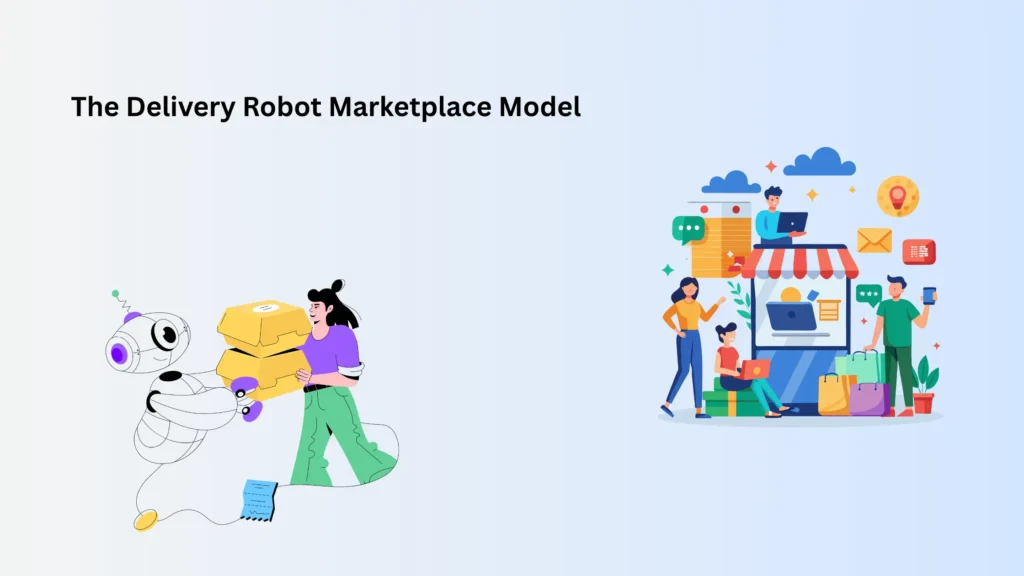
A delivery robot rental website is a multi-vendor marketplace that acts as the digital intermediary between robot owners (vendors) and businesses (renters). Much like a “Zillow for Automation,” it allows hospitals, restaurants, and warehouses to browse, book, and manage short-term or long-term robot leases. This model follows the Robotics-as-a-Service (RaaS) trend, allowing you to generate profit through commissions without ever having to own or maintain a physical fleet yourself.

A robot rental script can provide the core marketplace structure needed to manage vendor listings, robot availability, bookings, contracts, and renter payments from one platform.

1. The Market Opportunity: Why Now?

The “last mile” is the most expensive segment of the entire supply chain. As e-commerce and on-demand services dominate, automation has transitioned from a luxury to a necessity.

Labor Gap Bridging:

Restaurants and warehouses are using robots to handle repetitive internal transport, freeing up human staff for higher-value tasks.

Capital Preservation:

Purchasing a fleet of delivery robots requires massive upfront investment. Renting converts that “Capex” into a manageable, tax-deductible “Opex.”

Multi-Industry Demand:

From medicine transport in hospitals to document delivery on corporate campuses, the use cases are expanding daily, providing a massive, diversified customer base.

2. Choosing the Right Business Model

When entering the robotics market, you must decide between being an inventory-heavy owner or an asset-light marketplace.

The RaaS Advantage:

Traditional selling results in a one-time transaction. A rental marketplace, however, focuses on recurring revenue and high customer retention. By hosting multiple vendors, you scale your inventory without increasing your own capital requirements.

3. Core Features for a Profitable Platform

To build a platform that generates professional-grade revenue, your website must balance the needs of three distinct users through specialized dashboards.

The Admin Command Center:

This is your operational backbone. You need robust tools for Commission Configuration, where you can set different percentage takes, and Vendor Vetting to ensure only high-quality hardware enters your marketplace.

The Vendor Portal:

To attract fleet owners, your platform must offer Real-time Availability Calendars and Maintenance Tracking to ensure their assets are performing as promised.

Like an equipment rental script, the platform should help vendors track asset condition, prevent double bookings, and keep maintenance records up to date.

The Renter Experience:

For a hospital or a retail chain, the booking process must be seamless. This includes Advanced Filtering—allowing them to search for robots by payload capacity or battery life—and Digital Contract Management.

4. Diversified Revenue: Moving Beyond the Transaction
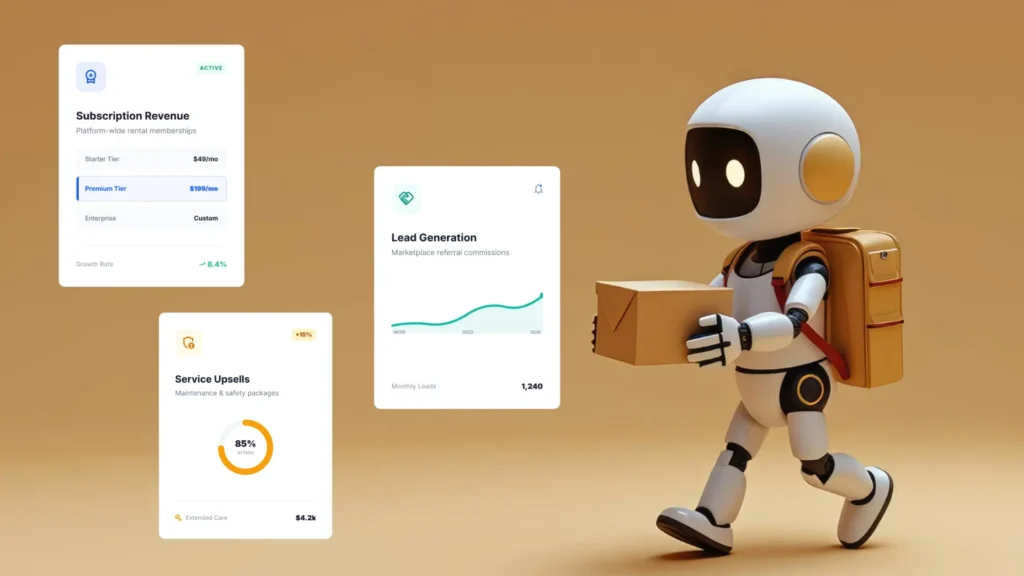
A truly profitable delivery robot website doesn’t just rely on a 10% booking fee. Sustainable growth comes from layered monetization:

Subscription Tiers:

Charging vendors a monthly fee for “Featured” placement.

Lead Generation:

Charging hardware manufacturers a fee for verified business inquiries.

Service Upsells:

Partnering with insurance providers or maintenance crews and taking a commission on every policy or service call booked through the platform.

5. Build vs. Buy: The Strategy of Speed

In the fast-moving world of automation, time-to-market is your most valuable currency. While custom development offers total control, it often results in a 12-month delay that allows competitors to lock in early partnerships.

A robot rental php script can offer a flexible starting point for businesses that want control over their platform while avoiding the cost and delay of developing every marketplace function from scratch.

The Case for Ready-Made White-Label Scripts:

1. Instant Infrastructure:

You bypass the technical debt of building payment gateways and booking logic from zero.

2. Reduced Financial Risk:

Lower upfront costs allow you to redirect your budget toward marketing and vendor acquisition.

3. Market Validation:

You can launch a “Lean” version of your site in weeks to test which niche (e.g., University campuses) is most profitable.

6. Strategic Positioning for Long-Term Growth

To ensure your platform doesn’t just launch but thrives, you must prioritize Vendor Quality and Transparent Pricing. Start by dominating a specific geographic region or a specific industry niche. Once you have validated the model in one market, use your scalable architecture to expand into new cities or sectors.

The best rental solution is one that combines reliable vendor management, transparent pricing, and a scalable booking experience for both robot owners and business renters.

Conclusion

Building a delivery robot rental website is about positioning yourself at the intersection of two powerful trends: the growth of autonomous hardware and the shift toward “Access-over-Ownership.” Success in this sector belongs to the platforms that can lower the barrier to entry for businesses while providing a reliable revenue stream for robot owners.


Book Your Meeting

Let’s Talk! Book Your Meeting