

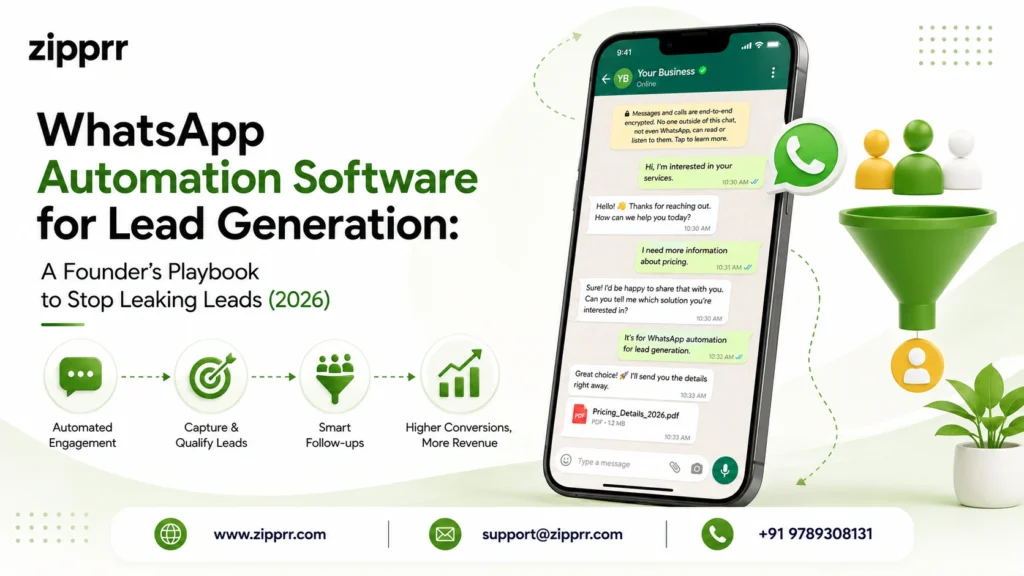
Think of the leads coming into your business as rainwater collected in a barrel. Every ad click, every “is this still available?” text, every quick question adds to what you’ve gathered. But now picture a crack running along the side of that barrel. That is exactly how most companies operate on WhatsApp without ever noticing, and each reply that slips away drains earnings that never show up on any dashboard.
The fix is not hiring three more people to stare at a phone all day. It is a system that catches interest the instant it appears and carries it forward until someone is ready to buy. That system is WhatsApp automation software, and this playbook shows you how to build one that actually plugs the leaks.
We will skip the vague theory. Instead, you will get the five places pipelines leak, a layer-by-layer build for catching every inquiry, a two-week rollout plan, and the small habits that separate teams that close from teams that chase. By the end, you will have a clear picture of how conversations on WhatsApp become customers on autopilot.
WhatsApp automation software captures, sorts, and follows up on prospects inside WhatsApp so no inquiry goes unanswered. It uses chatbots to reply the moment a message lands, qualification logic to spot serious buyers, segmentation to keep messaging relevant, and CRM syncing to hand warm leads to your team. The payoff is fewer dropped conversations, sharper follow-up, and a pipeline that fills itself while you sleep.
Key Takeaways
- Most lost sales are not rejections; they are conversations that stalled because nobody replied fast enough.
- Automation plugs five common leaks: slow first reply, no qualification, weak follow-up, messy handoffs, and generic blasts.
- A working setup layers auto-replies, a qualification bot, segments, a shared inbox, and CRM syncing.
- Roll it out in stages, test with real messages, then measure reply time and qualified-lead count.
- Consent and a human escape hatch keep the channel trusted and your account healthy.
The Hidden Cost of a Slow WhatsApp Reply
Interest has a short shelf life. Someone who messages your business is rarely messaging only your business. They are comparing, browsing, and deciding in real time, often across several tabs at once. The longer your reply takes, the colder they get, and the warmer your competitor looks.
Here is the quiet math. If ten people reach out today and three drift away before you respond, you have not lost three messages. You have not just lost their business; you have also missed out on the friends and colleagues they might have pointed your way. Repeat that daily, and the gap between what you earned and what you could have earned grows into something serious.
Speed is the lever, and humans are terrible at it after hours, during lunch, or when the volume spikes. Software is not. That single difference, answering in seconds every single time, is where most of the value hides.
What WhatsApp Automation Software Actually Does
Strip away the jargon, and the job is simple: it runs your WhatsApp conversations for you when you cannot. It listens for incoming messages, replies in a way that feels human, gathers the details you need, and decides who deserves a call from your team versus a gentle nudge later.
Under the hood, it plugs into the official WhatsApp Business API, which is what lets a serious WhatsApp automation platform handle real volume without breaking rules or getting flagged. On top of that sit the working parts, the chatbot flows, the instant auto-replies, and the scoring logic that tells buyers apart from browsers.
Think of it less as a robot and more as a well-trained receptionist who never clocks out, never forgets a name, and passes you only the people worth your time. The rest it takes care of on its own, out of sight.
The Five Leaks Draining Your Pipeline
Before you fix anything, name the leaks. Almost every business bleeds leads through the same five gaps, and automation seals each one.
The first leak is the slow first reply. A message sits unread for an hour, and the moment is gone. The second is no qualification, where every inquiry gets treated the same, and your best prospects wait behind time-wasters. The third is weak follow-up, the silent killer, where a promising chat simply fades because no one circled back.
The fourth leak is the messy handoff, where a hot lead reaches a human, but the context is lost, and they have to repeat themselves. The fifth is the generic blast, where you message everyone the same thing and train people to tune you out. Keep these five in mind as we build, because every layer that follows exists to close one of them.
Building Your Capture System, Layer by Layer
A good setup is not one big feature. It is several simple layers stacked, so each one catches what the last might miss. Build it like a founder building a machine, one part at a time.
Start with instant auto-replies. The second someone writes, they get a warm acknowledgment, so the clock never runs out on their interest. Next, add a chatbot that carries the conversation, asking a few natural questions instead of leaving people to wonder if anyone is home. This is where a capable WhatsApp automation tool earns its keep, because the flow feels like chatting with a helpful person rather than filling out a form.
Layer three is lead qualification. As the bot chats, it scores each contact on need, budget, and urgency, so serious buyers rise to the top. Layer four is segmentation, sorting people by what they want, so no one gets an irrelevant message again. Layer five is the shared inbox, where your team steps into any conversation the bot flags as high value, picking up with full context already in hand.
Finally, wire it into your CRM. Every qualified lead lands in your pipeline with the whole conversation attached, and broadcast tools plus analytics let you re-engage quiet contacts and see which layers are pulling their weight. Stacked together, these layers turn a leaky bucket into a sealed pipeline.
The Lead Journey, Start to Finish
It helps to watch a single lead travel through the machine. Here is the path from first hello to booked deal.
A prospect taps a click-to-chat button on your site, an ad, or a QR code, and the moment their message arrives, it gets a friendly acknowledgment. The chatbot then opens a short, easy conversation, learning what the person is after without grilling them.
As answers come in, the system quietly scores and tags the contact, dropping them into the right segment. If the signals are strong, the lead is passed to a rep through the shared inbox with the full history attached, ready to close. If the timing is not right yet, the prospect slides into an automated follow-up track that checks back with helpful nudges until they are ready. No one falls through, because every branch of the journey leads somewhere.
Stories From the Field
A boutique fitness studio used to lose weekend inquiries because the front desk was busy running classes. After setting up a qualification bot, every “Do you have space Saturday?” got an instant answer, a quick question about goals, and a booking link. Trial sign-ups climbed simply because nobody waited for a reply.
A solar installer tells a different version of the same story. Prospects would message about panels, then vanish into the weekend. Now the bot captures roof type, rough budget, and location on the spot, sorts each lead, and drips useful savings breakdowns over the next few days. Sales reps only pick up the phone once a prospect signals real intent, so their hours go toward closing rather than sifting.
Then there is a small travel agency that was once drowned in repeated questions about packages. The bot now handles the basics, gathers travel dates and party size, and hands over only the ready-to-book inquiries. The agent’s day quietly transformed from answering the same five questions to actually planning trips.
Where This Works Best
Any business that lives on inbound questions is a candidate. Clinics and dental offices book consultations and cut no-shows with reminders. Property teams pre-screen buyers and set up viewings. Coaching and course creators guide curious visitors toward the right program.
Local services like plumbers, movers, and salons capture job details before the phone tag begins. Online stores rescue abandoned carts and answer sizing questions in seconds. Car dealers, tutoring centers, and event planners all share the same rhythm: reply fast, ask smart, follow up without fail. Wherever those three moves drive revenue, this approach pays off.
The Honest Trade-offs
No tool is pure upside, so let us be straight about both sides. On the plus side, you get replies in seconds around the clock, cleaner lead quality, follow-up that never forgets, a full record of every chat, and a team freed to focus on closing. You also meet people where they already feel comfortable, which lowers the friction of that first conversation.
On the other side, a clumsy bot can annoy people, so the flow needs real thought and a few rounds of testing. The channel comes with rules about consent and messaging that you have to respect, or you risk your reputation and your account. And some conversations, the emotional or complicated ones, will always need a human. Good automation plans for that, instead of pretending otherwise.
Doing It Yourself vs Letting Software Handle It
Sometimes the clearest way to weigh a choice is side by side.
| What matters | Handling it manually | Running it on automation |
|---|---|---|
| Reply speed | Whenever someone is free | Seconds, any hour |
| Coverage | Working hours only | Nonstop, including nights and weekends |
| Busy-day capacity | Falls apart under a rush | Handles a flood without blinking |
| Sorting good leads | Gut feel, hit or miss | Consistent scoring every time |
| Chasing follow-ups | Often forgotten | Automatic and on schedule |
| Growing the volume | Means more hires | Mostly a fixed cost |
| Record keeping | Scattered notes | Every chat is saved and searchable |
What Shapes the Price Tag
Costs vary, and a few factors do most of the moving. The biggest is conversation volume, since WhatsApp Business API charges tend to follow how many chats you begin. Team size matters too, because more people sharing the inbox usually means a higher tier.
Beyond that, richer capabilities push the price up: advanced bot logic, deeper CRM connections, and detailed analytics typically sit on premium plans. Setup and support are the quiet variables, since a tool that is painful to configure costs you in time even when the sticker looks cheap. The smart way to compare is not by monthly fee but by what a single extra qualified lead is worth to you. Against that number, most plans pay for themselves quickly.
Your First Two Weeks: A Rollout Plan
You do not need a quarter to launch. A focused fortnight is plenty. In the first few days, connect your business to the WhatsApp Business API through your chosen WhatsApp automation software, verify your profile, and sketch your ideal conversation on paper, from greeting to the questions that reveal a real buyer.
Mid-week, build that flow in the bot editor and keep it short, warm, and human. Set auto-replies for common questions and for after-hours messages, then create your first segments and connect the tool to your CRM so leads land where your team already works.
In the final stretch, test everything. Message your own bot the way a real prospect would, rope in a colleague or two, and smooth out any reply that feels stiff. Once it flows naturally, publish your click-to-chat links, send one small, well-targeted broadcast, and start watching your numbers. Two weeks in, you have a live system and real data to improve on.
Habits of High-Converting WhatsApp Teams
The best teams share a handful of habits worth copying. They write like people, not scripts, keeping messages short and warm so a chat never feels robotic. They ask only what they truly need, because every extra question costs them a reply.
They always leave a door open to a real human, which builds trust and rescues the conversations that software cannot close. They treat consent as sacred, messaging only people who opted in and respecting when to back off. And they revisit their analytics often, spotting exactly where prospects drop and tightening the flow accordingly. None of these is complicated; they are just done consistently.
Traps That Quietly Kill Results
A few mistakes show up again and again. The most damaging is building a bot with no exit, so a frustrated prospect hits a wall instead of a person. Always give people a fast route to a human.
Another is asking too much, too soon; pile on ten questions and people simply leave. Keep it lean. Neglecting follow-up wastes every lead you worked to capture, since a saved contact means nothing without a next message. Ignoring your own data is just as costly, because the numbers point straight at the fix. And blasting your entire list with the same generic note is the fastest way to teach people to ignore you, so segment and stay relevant instead.
Pro Moves Most Teams Miss
Once the basics work, a few advanced touches lift results further. Open with value rather than a bland “how can I help,” offering a quick tip, a useful answer, or a small perk to keep the conversation moving. Generosity early earns engagement later.
Lean on timing, too. Because WhatsApp messages get read almost immediately, a nudge sent a day after the first chat often lands right when someone is deciding. And put your data to work by referencing what a prospect already told you; a message that echoes their exact need reads as handcrafted and converts far better than a template ever could.
Where WhatsApp Lead Gen Is Headed
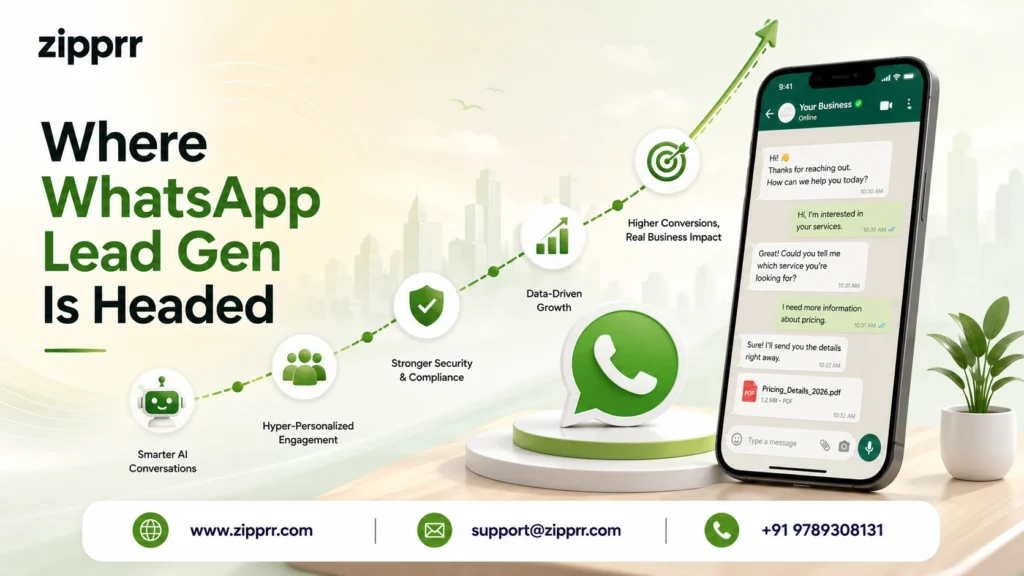
The channel keeps getting sharper. Smarter AI is making bots feel less scripted and more like a real conversation, qualifying leads with barely any setup. Personalization is deepening as systems pull in more context to shape every reply around the person receiving it.
Meanwhile, features like voice notes, in-chat checkout, and richer interactive buttons are letting a single conversation carry someone from question to purchase without ever leaving the thread. The businesses wiring up their lead engine on WhatsApp today are the ones best placed to ride that wave tomorrow.
Why Zipprr
Zipprr packages every layer of this playbook into one place. Its chatbot and auto-replies make sure no message goes cold, while built-in qualification quietly scores each contact so your team always knows who to reach first.
Broadcasts and segmentation let you re-engage quiet prospects with messages that actually fit them, and native CRM syncing drops qualified leads into your pipeline with full context attached. A shared inbox keeps your people ready for the high-value chats, and clear analytics show you which layers are working. Running on the official WhatsApp API, Zipprr’s WhatsApp automation software grows with you, giving your team one dependable home to capture, qualify, and convert every conversation.
Wrapping Up and Your Checklist
Leads rarely walk away because they hated your offer. They walk away because the conversation stalled, and nobody caught it in time. Seal the leaks, reply to the instant interest that appears, sort the serious buyers, follow up like clockwork, and WhatsApp turns from a noisy inbox into one of your steadiest sources of customers.
Here is your quick-start checklist:
- Connect to the WhatsApp Business API through a trusted platform.
- Sketch and build a short, friendly qualification chat.
- Turn on auto-replies, set up segments, and sync your CRM.
- Test with real-style messages before you go live.
- Publish click-to-chat links and send one targeted broadcast.
- Check reply time and qualified-lead counts weekly, then refine.
Ready to seal the leaks and turn WhatsApp into a lead engine? Book a Free Demo or Chat on WhatsApp to see Zipprr in action.
Ready to seal the leaks and turn WhatsApp into a steady lead engine?
Book a Free Demo to watch Zipprr’s chatbot, qualification, and CRM syncing work together, or Chat on WhatsApp to talk with our team right now.