

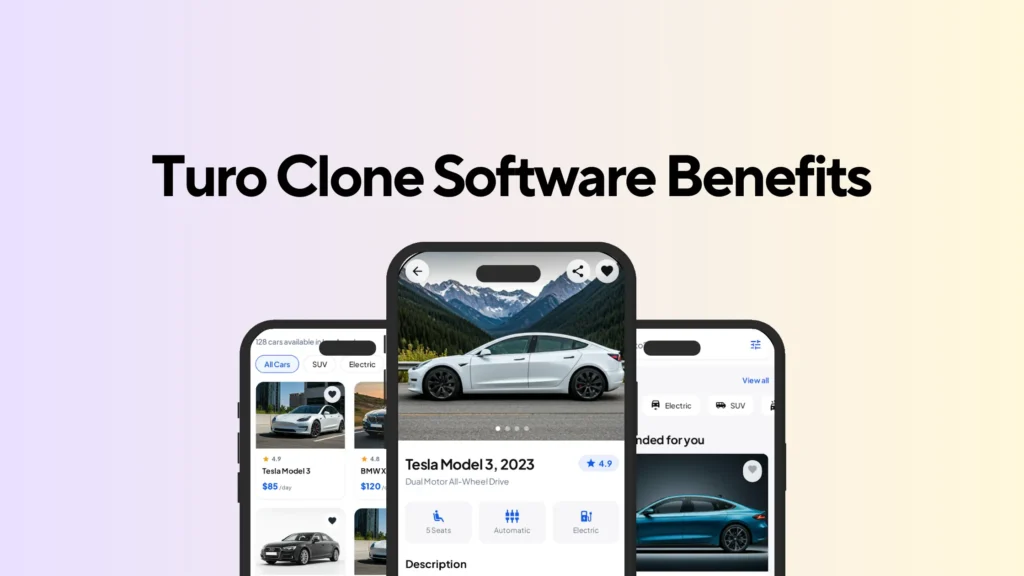
Turo Clone Software: How It Works, Use Cases & Business Benefits
What is a Turo Clone?
For investors and entrepreneurs, a Turo clone represents a turnkey entry into the Mobility-as-a-Service (MaaS) sector, eliminating the need for years of proprietary R&D while offering full control over branding, monetization strategies, and source code ownership.
Investor Note: A Turo clone is not just a copy; it is a flexible base architecture that allows for rapid deployment and customization to fit niche markets (e.g., Luxury, EV-only, or Localized fleets).
Market Trajectory: Why Invest in P2P Mobility Now?
Asset Monetization: Vehicle owners are seeking to offset depreciation and insurance costs by monetizing idle assets.
Consumer Behavior: Modern travelers prefer the flexibility, variety, and lower costs of P2P rentals over legacy rental counters.
Hyper-Localization: Global giants cannot optimize for every micro-market. Regional platforms tailored to specific regulatory environments and user behaviors are capturing significant market share.
Technical Architecture & Operational Flow
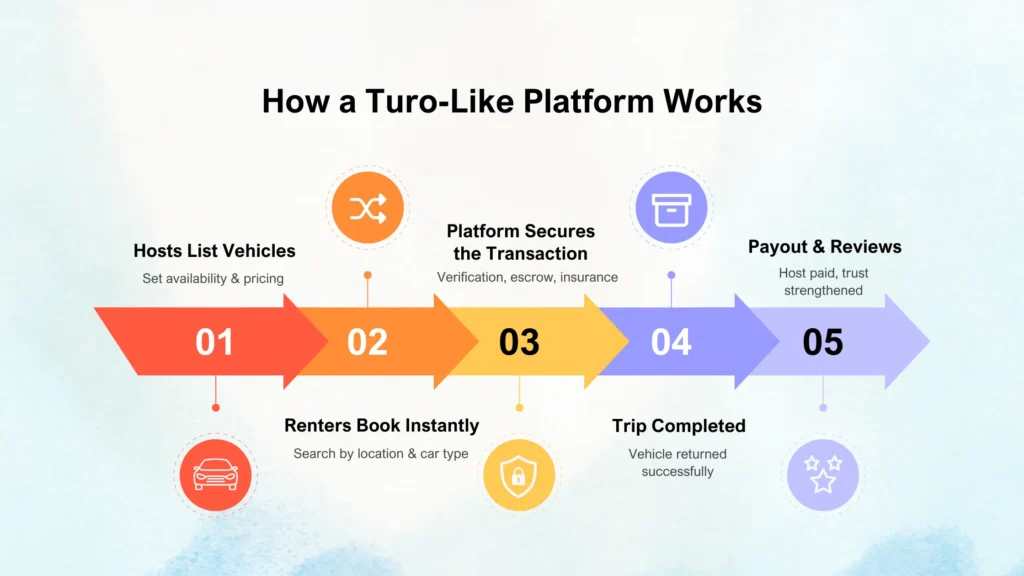
The Host Interface (Supply Side): Features intuitive fleet management tools for uploading inventory, setting dynamic pricing, and defining availability calendars.
The Renter Interface (Demand Side): Advanced search algorithms allow users to filter by geolocation, vehicle class, and transmission type, followed by an instant booking workflow.
The Admin Core (Governance): A centralized dashboard managing KYC (Know Your Customer) verification, escrow-based payment processing, and dispute resolution.
Business Case: Turo Clone vs. Building from Scratch
For stakeholders deciding between a custom build or a pre-built solution, the decision relies on Time-to-Market (TTM) and Return on Investment (ROI).
| Metric | Custom Development (Scratch) | White-Label Turo Clone |
|---|---|---|
| Time-to-Market | 6–12 Months | 4–8 Weeks |
| Development Cost | High CapEx ($100k+) | Optimized Cost (<$20k) |
| Technical Risk | High (Unproven architecture) | Low (Field-tested logic) |
| IP Ownership | 100% Owned | 100% Owned (with purchase) |
| Scalability | Dependent on initial architecture | Pre-configured for scaling |
Unsure which tech stack suits your market? Book a Free Technical Consultation to review your architecture needs.
Strategic Advantages Over Centralized Platforms
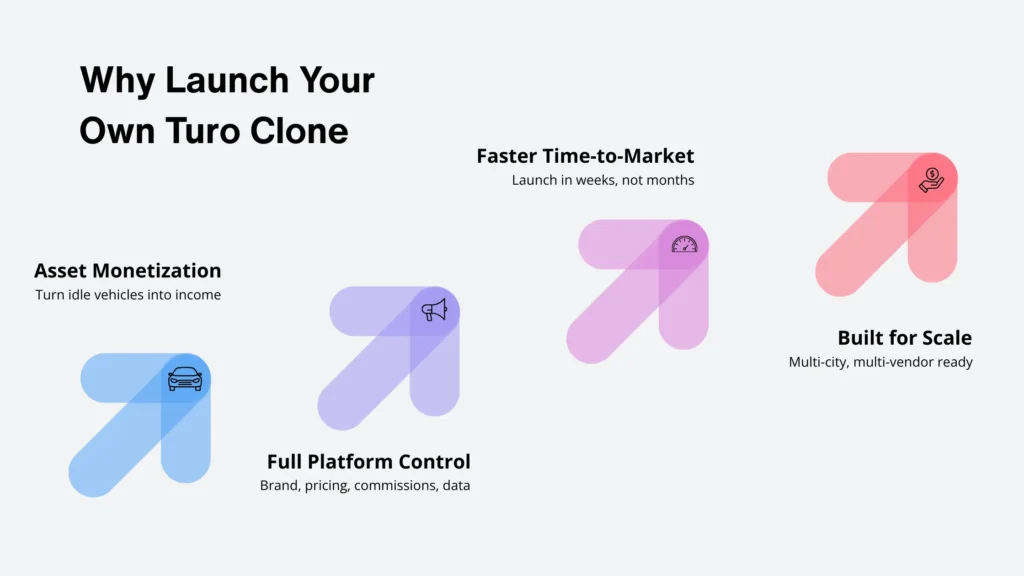
Total Autonomy: You control the commission structure (e.g., taking 15% vs. Turo’s variable rates).
Brand Equity: You build valuation for your own brand, not a third party.
Core Feature Set: The MVP and Beyond
1. For Hosts (Fleet Operators)
Dynamic Pricing Algorithms: Tools to adjust rates based on demand spikes (weekends, holidays).
Calendar Sync: iCal integration to prevent double bookings across platforms.
2. For Renters (End Users)
Instant Verification: AI-driven identity and driver’s license verification APIs.
Tiered Insurance Options: Flexible protection plans integrated into the checkout flow.
3. For Admins (Platform Owners)
God-View Dashboard: Real-time analytics on GMV (Gross Merchandise Value), CAC (Customer Acquisition Cost), and churn.
Commission Management: Granular control over platform fees and tax automation.
Use Cases: Finding Your Niche
Luxury Concierge: High-ticket exotic car rentals with premium service tiers.
EV-Exclusive Fleets: Catering to eco-conscious travelers with charging station integration
Corporate Mobility: Long-term leasing solutions for business travelers.
Dealership Loaners: Digitizing loaner fleets for automotive dealerships.
Conclusion: Accelerate Your Launch
Ready to Disrupt the Rental Market?
View Live Demo – https://zipprr.com/turo-clone/#demo