

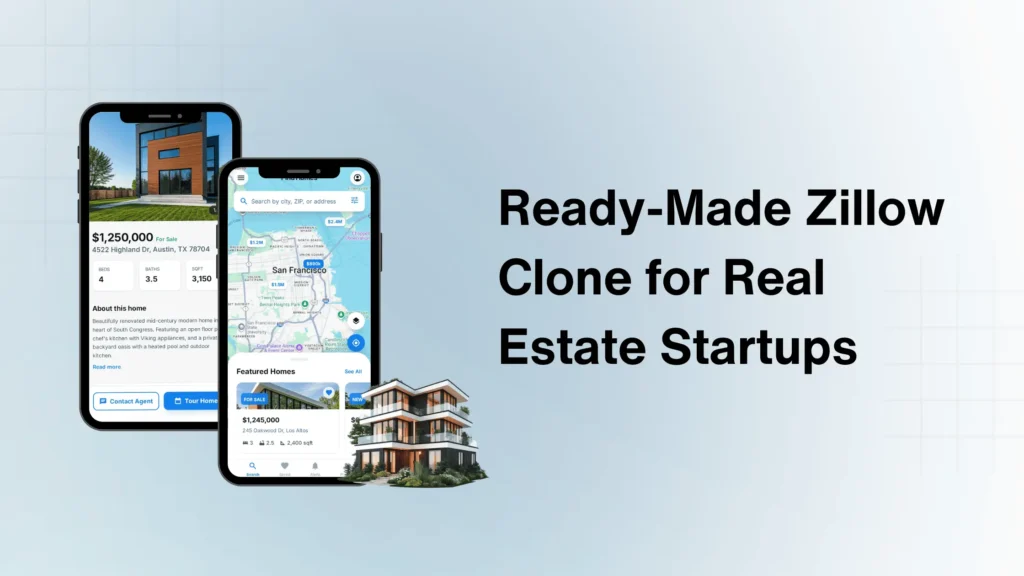
Why Build an App Like Zillow Today?
The real estate industry has shifted heavily toward digital-first discovery, where buyers and renters expect instant access to verified listings, transparent pricing, and neighborhood insights. Zillow-style apps satisfy this demand by combining listings, search, maps, and agent access into one seamless experience that works especially well on mobile.
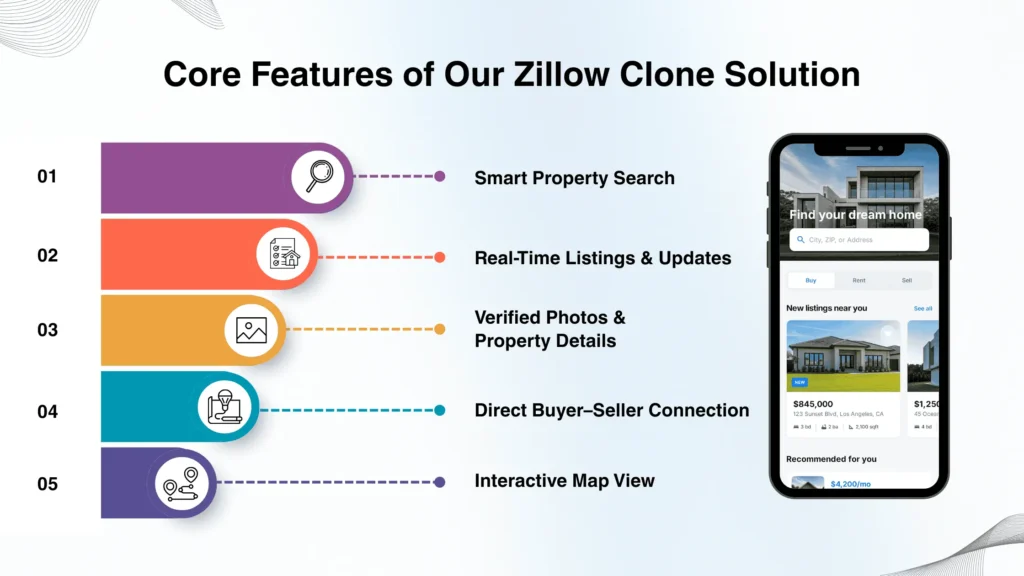
From a business perspective, this model is profitable because real estate transactions are high value. Revenue from agent subscriptions, featured listings, lead fees, and ads scales efficiently even with moderate traffic. This makes Zillow-like apps ideal for startups launching regional platforms, brokers modernizing operations, and aggregators or developers aiming to control listings and demand under a single brand.
What Is a Zillow-Like App?
A Zillow-like app is a data-driven real estate marketplace that combines property inventory, advanced search, pricing intelligence, and monetization into a single platform. It goes beyond displaying listings by actively connecting buyers, sellers, and agents through user intent.
Unlike traditional real estate websites that show static property data, Zillow-style platforms enrich listings with price history, market trends, and behavioral insights. This approach solves common problems like information asymmetry, poor discovery, and low-quality leads while enabling consistent revenue generation.
Who Uses a Zillow-Like App?
A Zillow-like app serves multiple user roles within one ecosystem. Buyers and renters use it to explore properties, compare prices, understand neighborhoods, and contact agents without relying on offline brokers. Sellers and property owners use the platform to list homes, manage inquiries, and gain visibility among qualified buyers.
Real estate agents and brokers depend on the app for lead generation, branding, and performance analytics. Platform owners and admins oversee listings, users, monetization, compliance, and overall marketplace health to ensure sustainable growth.
How Does an App Like Zillow Work?
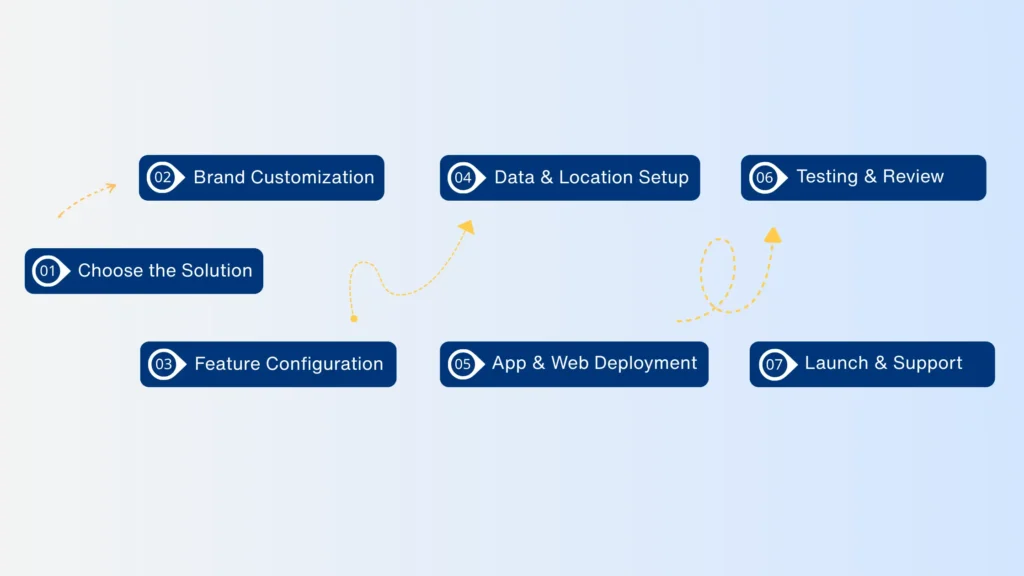
An app like Zillow follows a structured flow that turns property data into revenue. Listings are ingested from MLS and IDX feeds, third-party APIs, and direct submissions, then standardized and moderated to ensure accuracy and trust.
Approved listings become searchable through filters and interactive maps. User actions such as inquiries or visit requests are captured as leads and routed to listing agents or paid subscribers. Monetization occurs naturally through featured listings, subscriptions, and advertising placements.
What Features Make a Typical App Like Zillow?
Zillow-like platforms organize features by user role to support a scalable marketplace rather than offering generic tools.
- Buyer and Renter Features
- Advanced search with price, location, and amenity filters
- Map-based discovery for visual property exploration
- Detailed listings with images, pricing, and history
- Saved searches and alerts for new matching properties
- Direct contact options for agents or owners
- Seller and Owner Features
- Inquiry and lead management dashboards
- Performance insights such as views and saves
- Paid promotion options for higher visibility
- Paid promotion options for higher visibility
- Agent Features
- Public agent profiles for credibility and branding
- Lead inbox with response management
- Analytics for listing and lead performance
- Subscription or pay-per-lead access models
- Admin Features
- Listing and user moderation tools
- Pricing, plans, and monetization management
- Analytics dashboards for growth tracking
- Fraud prevention and data quality controls
AI-Powered Features That Enhance Zillow-Like Apps

Artificial intelligence transforms Zillow-like apps into intelligent decision platforms. AI-driven home valuation models estimate prices using historical sales, location trends, and market demand, helping users understand fair value instantly.
Personalized recommendations adapt to user behavior, while predictive pricing highlights emerging trends. Chatbots, conversational search, voice input, and intelligent map layers simplify discovery and increase engagement, especially on mobile devices.
Tech Stack for Building an App Like Zillow
A Zillow-like app requires a tech stack built for performance, scalability, and data-heavy workloads. Modern frontend frameworks power fast and responsive search and map interfaces across web and mobile.
The backend manages listings, users, leads, and monetization logic. Relational databases store structured property data, while flexible databases support analytics and AI use cases. Dedicated search engines enable fast geo-based filtering, maps power visual discovery, cloud infrastructure ensures scalability, and third-party APIs provide listings, payments, notifications, and analytics.
Architecture of a Zillow-Like App
Zillow-like platforms are designed to scale with traffic and inventory. Early versions often use a modular monolithic structure for speed, then evolve into microservices as usage grows. Search is isolated into a dedicated layer to maintain fast response times.
Caching reduces database load, asynchronous jobs handle heavy imports and AI updates, and geographic data partitioning supports millions of listings. Continuous MLS synchronization, encryption, and role-based access control ensure data freshness, security, and compliance.
Challenges and Considerations When Building a Zillow-Like App
Maintaining accurate and up-to-date listing data is one of the biggest challenges, as outdated information quickly erodes user trust. MLS and IDX integrations impose restrictions that affect feature design and monetization strategies.
Legal compliance around privacy, advertising, and housing regulations must be addressed early. Many platforms also face the cold-start problem, where balancing listings and users is difficult in the early stages. Careful moderation, trust-building, and well-timed monetization are essential for long-term success.
Build From Scratch vs Zillow Clone vs SaaS
Building from scratch offers full control but requires high investment, longer timelines, and experienced teams. SaaS platforms allow fast launches but limit customization, data ownership, and monetization flexibility.
Zillow clone solutions provide a balanced approach by enabling faster launches with proven marketplace features while retaining ownership and customization. For most startups and regional real estate platforms, this option offers the best mix of speed, cost efficiency, and scalability.