


Rate this post
How To Build A Hostel Booking App That Actually Makes Money
Many founders enter the travel tech market with high expectations, only to find that downloads don’t naturally translate into dollars. In the high-stakes world of budget travel, the digital landscape is crowded, and the cost of custom development can often drain a startup’s reserves before they even secure their first booking. The reality is that most hostel apps fail not because of poor coding, but because of a flawed business strategy that prioritizes “building” over “monetizing.”
What Makes a Hostel App Profitable?
A profitable hostel app is a diversified revenue ecosystem that goes beyond simple booking commissions. While a standard 10% to 20% cut per reservation is the engine, true profitability stems from multiple streams: featured listings for premium visibility, subscription tiers for hostel owners, and integrated affiliate partnerships for local tours or equipment rentals. Profitability is the result of balancing user growth with high-margin secondary services.
The Growing Opportunity in Budget Travel
The market for affordable stays is expanding, fueled by a global surge in digital nomads and student travelers who prioritize mobility and instant gratification. This demographic demands “mobile-first” experiences—if a booking isn’t confirmed in three clicks, the user is gone.
Simultaneously, hostel owners are growing weary of the high commissions charged by “Big Tech” travel platforms. This friction creates a massive opening for niche or region-specific apps that offer:
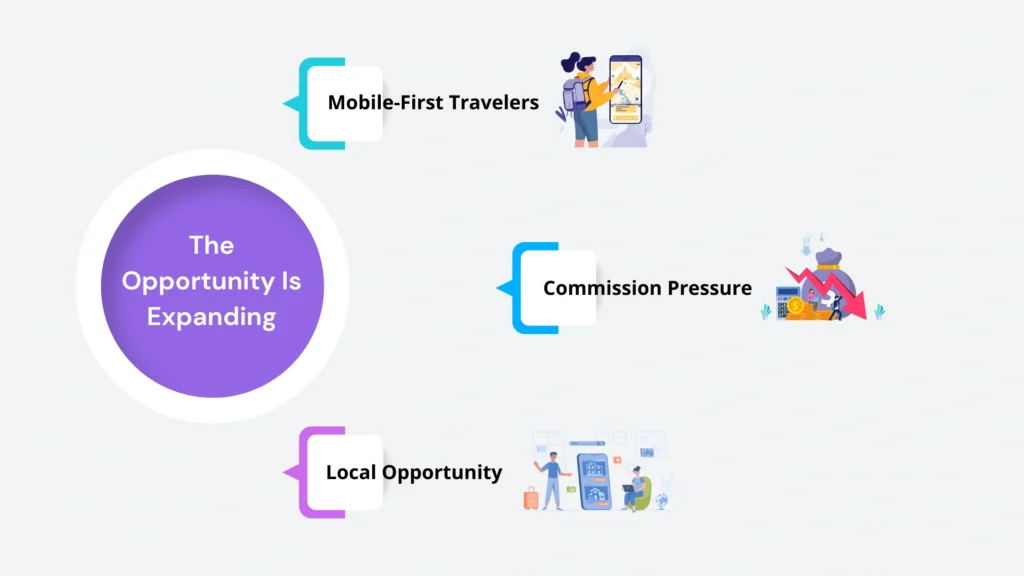
- Lower Commission Structures: Attracting owners who want to keep more of their revenue.
- Hyper-Local Expertise: Providing curated experiences that global giants overlook.
- Direct Communication: Tools that allow hosts to build a rapport with guests before they arrive.
The "Build vs. Buy" Dilemma: A Costly Miscalculation
The most common trap for new entrepreneurs is the urge to build a platform from scratch. While custom development offers total creative freedom, the financial reality is often sobering. A bespoke booking app can take upwards of a year to develop, with costs spiraling between $50,000 and $300,000.
In a marketplace business, speed is your greatest asset. While you are stuck in a six-month development cycle, competitors are already onboarding hostels and capturing market share. Every month spent “in development” is a month of zero revenue and high burn rate.
The Smarter Path: Ready-Made Solutions
For those looking to generate ROI quickly, a ready-made booking solution is the strategic choice. Rather than reinventing the wheel by coding a calendar or a payment gateway from zero, these solutions provide a battle-tested framework that can be launched in weeks.
Why this accelerates growth:
- Market Validation: You can test your niche immediately with real users rather than guessing what they want during a long build phase.
- Reduced Risk: Lower upfront investment means you can pivot your strategy without the "sunk cost" of an expensive custom build.
- Operational Focus: Instead of managing a team of developers, you can focus on what actually drives money: marketing, partnerships, and user acquisition.
Strategic Launch: From Niche to Scale
To ensure your app actually makes money, avoid the temptation to go global on day one. The most successful platforms start by dominating a specific geographic region or a very specific traveler niche (e.g., “Eco-friendly hostels in Southeast Asia”).
- Secure the Supply: Partner with hostels before your public launch to ensure users have options the moment they download the app.
- Drive Conversion: Invest in "trust signals"—real-time availability, secure multi-currency payments, and an intuitive review system.
- Automate the Back-End: Use a system that automates commission tracking and notifications so you can scale without needing a massive administrative team.
Conclusion
Winning in the travel tech space isn’t about having the most unique code; it’s about having the most efficient business model. By choosing a ready-made solution, you bypass the technical debt that sinks most startups and jump straight to the execution phase. In a market that moves this fast, the winners aren’t those who build the most complex systems—they are the ones who reach the customer first.