


Why New Freelance Marketplaces Struggle to Grow
Launching a freelance marketplace looks deceptively simple. Demand for remote work is global, talent is abundant, and success stories like Upwork make the opportunity feel proven. Yet most new freelance platforms struggle to gain traction long after the product is built.
The hard truth is that technology is rarely the problem. Modern frameworks, ready-made scripts, and cloud infrastructure make it easy to launch a functional platform. What’s difficult is solving the real growth challenges: acquiring both freelancers and clients at the same time, building trust between strangers, and creating enough activity so the marketplace feels alive. Without users and transactions, even the best-designed app feels empty.
First-time founders often assume that launching the platform will automatically attract users. They expect freelancers to sign up because fees are lower, or clients to join because the UI is cleaner. In reality, users don’t join marketplaces for features—they join for opportunity. Freelancers want real jobs. Clients want proven talent. If either side doesn’t see value immediately, they leave.
Another misconception is that aggressive marketing or paid ads can fix early traction problems. Ads might bring traffic, but traffic without liquidity converts poorly. Early growth failures usually come from weak positioning, launching too broadly, and ignoring trust-building mechanisms that reduce friction for first-time users.
This guide is designed to solve those problems. It breaks down how Upwork-like freelance marketplaces actually work, why some scale while others stall, and how founders can design a go-to-market strategy that prioritizes users, growth, and sustainable monetization. Instead of generic advice, you’ll learn how to approach launch sequencing, acquisition, and trust in a way that gives your marketplace a real chance to grow.
Understanding an Upwork-Like Freelance Marketplace Model
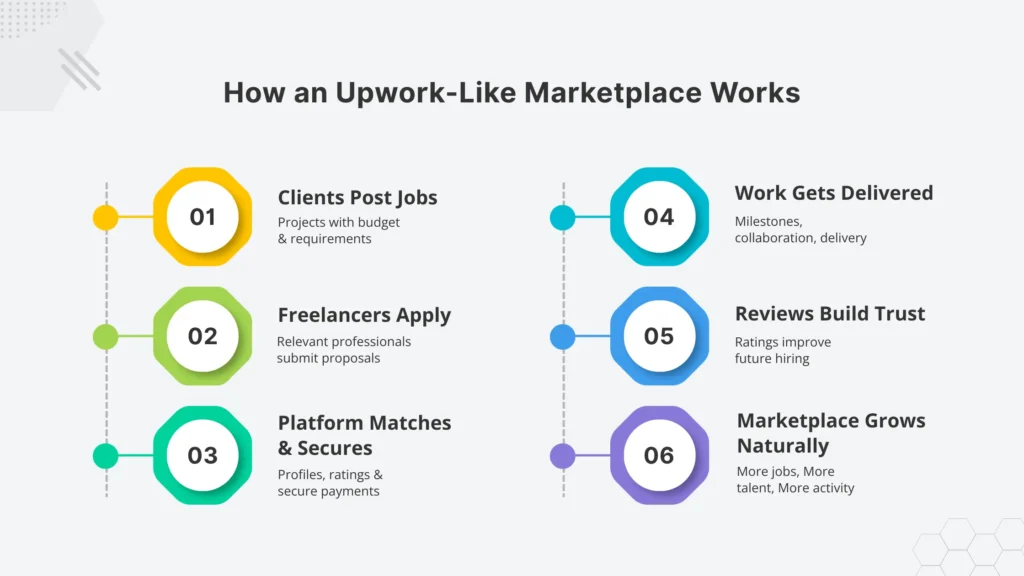
An Upwork-style marketplace is a two-sided platform connecting freelancers who sell skills with clients who need work done. The platform itself doesn’t create value directly; it facilitates transactions, enforces rules, and builds trust so both sides can transact confidently.
There are three core participants:
- Freelancers, who create profiles, bid on jobs, deliver work, and build reputation.
- Clients, who post projects, review proposals, hire talent, and make payments.
- Platform operators, who manage matchmaking, payments, dispute resolution, and growth.
The key dynamic that defines these platforms is network effects. As more freelancers join, clients get better choice and pricing. As more clients post jobs, freelancers see more earning opportunities. Growth on one side increases value for the other—but only after a critical mass is reached.
This is why scale matters so much. Early-stage platforms often fail not because demand doesn’t exist, but because they never reach the point where the marketplace feels reliable. A client who posts a job and receives no quality proposals is unlikely to return. A freelancer who applies to multiple jobs without responses will abandon the platform quickly.
Successful freelance marketplaces differentiate themselves in a few key ways:
- They focus on a clear segment early (industry, geography, or skill set).
- They reduce friction in the hiring and onboarding process.
- They invest heavily in trust mechanisms such as reviews, verified profiles, and secure payments.
Early traction plays an outsized role in long-term growth. Marketplaces that achieve even a small, engaged core—where freelancers are earning and clients are rehiring—can compound growth through referrals, repeat usage, and organic demand. Platforms that chase scale too early often dilute liquidity and stall.
Benefits of Using an Upwork-Like App for Founders
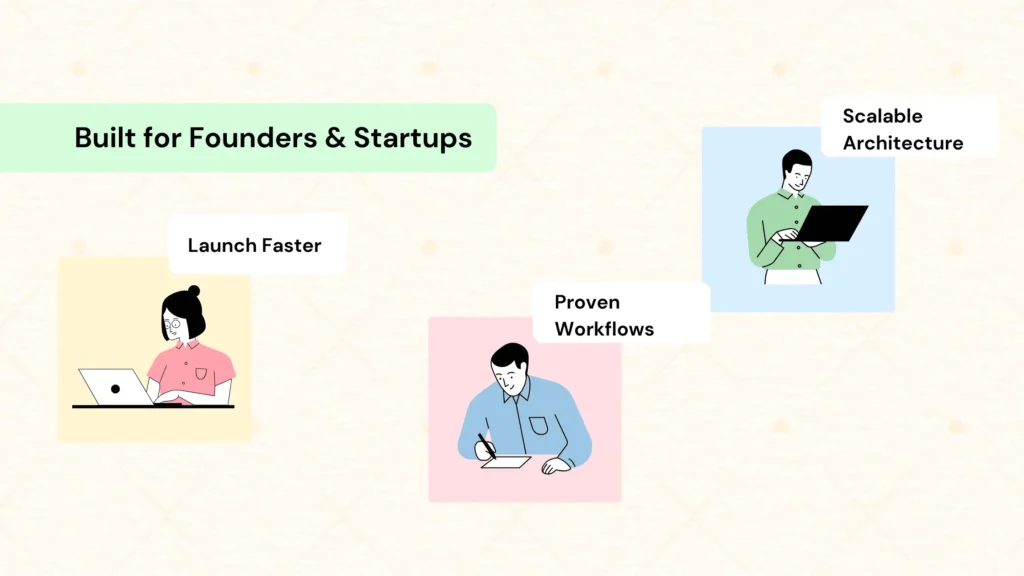
For founders, launching an Upwork-like app offers several strategic advantages over building a marketplace from scratch. The biggest is speed to market. Pre-built marketplace frameworks allow teams to focus on go-to-market execution rather than spending months engineering basic workflows.
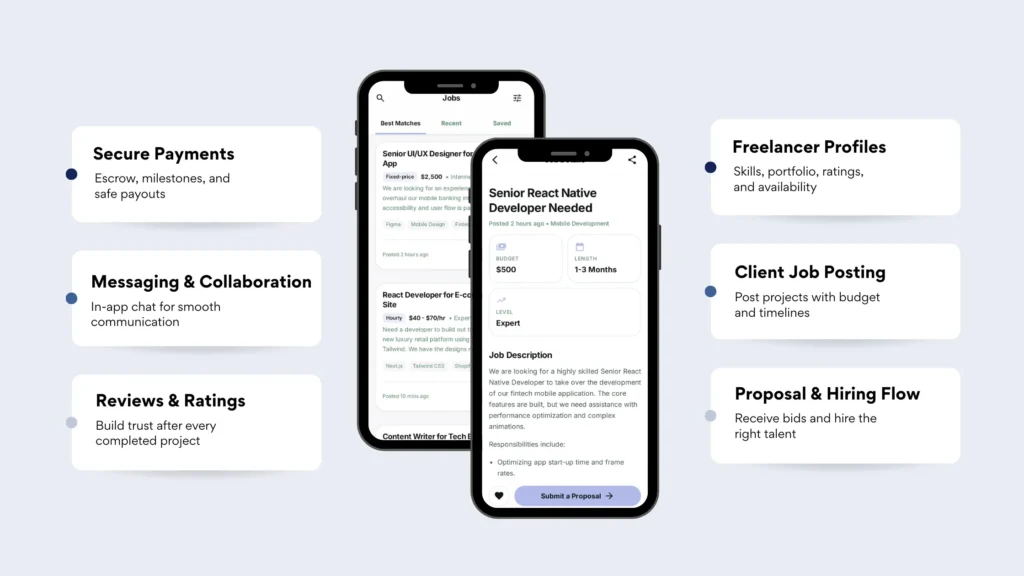
Another major benefit is pre-validated marketplace mechanics. Core features such as job posting, bidding, contracts, messaging, escrow, and ratings are already proven patterns. This reduces experimentation risk and lets founders invest energy into positioning and growth instead of reinventing fundamentals.
Built-in trust systems are especially valuable in the early stages. Profiles, reviews, identity verification, and escrow payments lower psychological barriers for first-time users. When trust is baked into the product, acquisition becomes easier because users feel safer trying a new platform.
Upwork-style apps also offer flexibility to go niche. Instead of competing head-on with general marketplaces, founders can tailor the platform to specific freelancer categories—designers, developers, marketers, legal professionals, or even hyper-local services. Niche focus improves liquidity and differentiation.
Finally, these platforms lower both operational and acquisition risk. Automated workflows reduce manual intervention, while proven monetization models make revenue forecasting more predictable. For founders evaluating build vs buy, an Upwork-like app provides a faster, safer path to validating demand and scaling growth.
Solving the Chicken-and-Egg Problem in Freelance Marketplaces
The chicken-and-egg problem is the defining challenge of freelance marketplaces. Freelancers won’t join without clients, and clients won’t join without freelancers. Solving this isn’t about clever messaging—it’s about intentional sequencing.
The first decision is which side to seed first. In most cases, freelancer-first works better for early stages. Talent supply is easier to recruit, especially if you target a niche or under-served segment. Freelancers are often willing to join new platforms if there’s a promise of future work, visibility, or lower competition.
However, freelancers alone don’t create value. To activate them, platforms use tactics like:
- Guaranteed or curated jobs posted by the platform or partners.
- Invite-only client launches to ensure quality demand.
- Pre-vetted talent pools that signal quality to early clients.
Client-first strategies can work in specific scenarios, such as local services or enterprise-focused marketplaces, but they require stronger sales and onboarding efforts. In these cases, the platform often manually sources freelancers to fulfill early demand.
Niche and local strategies are powerful here. Launching globally dilutes liquidity. Launching within a specific industry, city, or use case concentrates demand and makes the marketplace feel active faster. A small, busy marketplace beats a large, empty one.
Incentives must be used carefully. Financial bonuses can attract sign-ups but rarely drive retention. What works better are incentives tied to real outcomes—priority visibility, early access to high-quality jobs, or reduced fees for completed projects.
Ultimately, solving the chicken-and-egg problem is about control. Successful platforms don’t wait for the market to balance itself; they actively shape early interactions until organic network effects take over.
User Acquisition Strategies for Freelancers and Clients
User acquisition for freelance marketplaces must be asymmetric and intentional. You rarely grow both sides equally at the same time. Instead, founders should choose a primary side to focus on while ensuring the other side is sufficiently supported.
A freelancer-first model typically relies on community-driven onboarding. This includes outreach through LinkedIn, Twitter, Reddit, Discord servers, and niche forums where professionals already gather. Messaging should focus on opportunity, visibility, and reduced competition—not features.
Client acquisition often requires more trust-building. Early strategies include:
- Direct outreach to startups, agencies, or local businesses.
- Partnerships with bootcamps, accelerators, or professional communities.
- Thought leadership content that positions the platform as an expert in a specific niche.
Cold outreach can work early, especially for B2B clients, but it should transition to inbound channels as soon as possible. SEO, content marketing, and referrals scale better over time and reduce acquisition costs.
Community plays a critical role for both sides. Platforms that foster discussion, feedback, and peer recognition see higher retention. Simple actions—like spotlighting successful freelancers or featuring client success stories—reinforce social proof.
The key is sequencing. Acquire a manageable number of users, ensure they succeed, then scale acquisition. Growth without activation only increases churn.
Marketing and Growth Tactics That Actually Work
Marketing for two-sided marketplaces is different from traditional SaaS. Every tactic must consider who it attracts and how it affects liquidity.
SEO is one of the most effective long-term channels. High-converting pages target:
- Freelancer intent (e.g., “remote UX design jobs”)
- Client intent (e.g., “hire Shopify developer”)
Programmatic SEO allows platforms to scale these pages across skills, industries, and locations, creating compounding traffic over time.
Content marketing works best when it educates rather than sells. Guides, salary insights, hiring playbooks, and freelancer resources attract both sides while building authority.
Referral and ambassador programs are especially powerful once basic liquidity exists. Freelancers refer peers. Clients refer other businesses. Incentives should reward successful transactions, not just sign-ups.
Email marketing supports retention and reactivation. Lifecycle campaigns—onboarding, job alerts, project completion follow-ups—keep users engaged and increase repeat usage.
Influencer and affiliate partnerships work when aligned with niche audiences. Generic influencer marketing rarely converts, but partnerships with respected industry voices can accelerate trust quickly.
Monetization, Payments, and Trust as Growth Levers
Monetization isn’t just about revenue—it directly affects adoption. High fees too early can slow growth. Many successful platforms start with lower commissions to attract users, then adjust pricing as value increases.
Common models include:
- Commission-based fees on completed projects.
- Subscriptions for freelancers or clients.
- Hybrid models combining both
Secure payments are a growth lever. Escrow, milestone payments, and transparent dispute resolution reduce fear for both sides. The easier and safer it feels to transact, the higher the conversion rate.
Payment method availability also matters. Supporting local and global payment options removes friction for international users and expands market reach.
Trust, compliance, and security aren’t overhead—they’re growth accelerators. Platforms that visibly protect users earn loyalty and word-of-mouth faster than those that don’t.
Why Most Upwork-Style Platforms Fail—and How to Avoid It
Most Upwork-style platforms fail for predictable reasons. They launch too broadly, rely heavily on paid ads, and underestimate the effort required to build trust and liquidity.
Common pitfalls include poor timing, unclear positioning, and copying features without differentiation. Many founders assume that matching Upwork’s functionality is enough, but users choose platforms based on relevance and opportunity, not feature parity.
Successful platforms study early growth lessons: niche focus, manual seeding, and relentless attention to first-user success. They treat launch as a process, not an event.
Proven launch checklist for sustainable growth:
- Define a narrow niche and ideal user.
- Seed one side intentionally.
- Ensure early users succeed.
- Build trust before scaling ads.
- Optimize for retention before expansion
A better-than-Upwork platform doesn’t win by being bigger—it wins by being more focused, more trusted, and more deliberate in how it grows.