

5/5 - (1 vote)
Handyman App with Multi-Language Support in the USA
Finding a reliable handyman should be simple. But for millions of people across the United States, language often becomes an unexpected barrier. Many home service apps still operate only in English, making it difficult for non-English speakers to book services, explain problems, or fully understand pricing and policies.
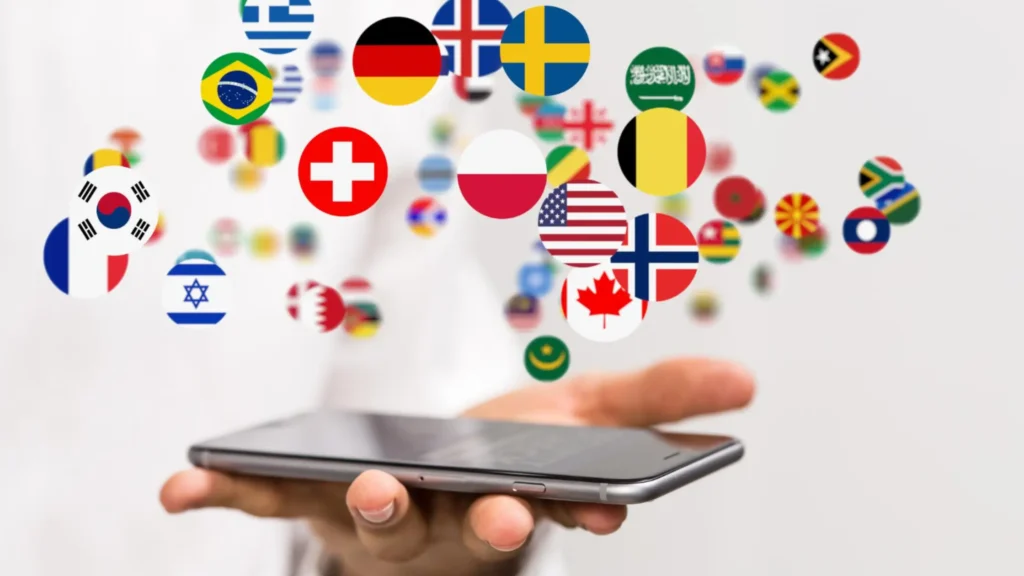
A handyman app with multi-language support changes this completely. It creates a more welcoming experience, improves communication, and helps businesses reach a much larger audience. In today’s diverse US market, multilingual support isn’t just helpful—it’s essential.
Reach More Customers Across the USA by Breaking Language Barriers
The USA is home to a rapidly growing population of Spanish, Chinese, Vietnamese, Korean, Arabic, and other non-English-speaking communities. These users actively need plumbing, electrical, carpentry, and maintenance services, yet many struggle to use English-only handyman apps confidently.
A multilingual handyman app makes home services accessible to everyone. Immigrant families feel more comfortable booking services, seniors can navigate the app without confusion, and bilingual households no longer worry about miscommunication. By offering multiple language options, handyman platforms instantly expand their reach and attract customers who are often ignored by competitors.
From major metro areas to growing suburban communities, the demand for non-English home service apps is real—and growing every year.
Better Communication Means Better Jobs and Happier Customers
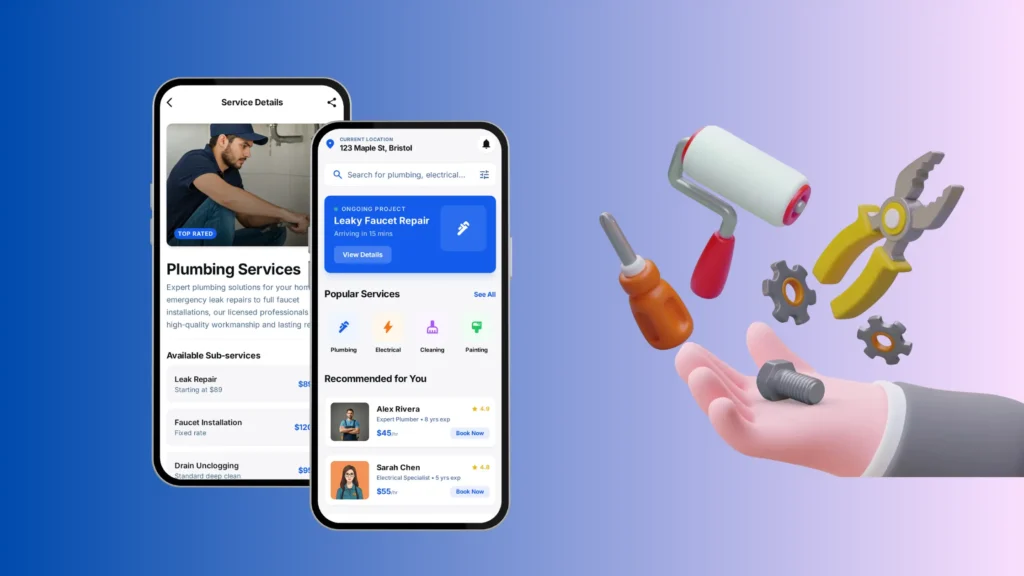
One of the biggest challenges in home services is misunderstanding. When customers cannot clearly explain an issue, professionals may arrive unprepared, jobs take longer, and disputes become more likely. Language gaps are often the root cause.
A multilingual handyman app solves this by allowing users to book services, describe problems, and chat with professionals in their preferred language. Clear communication leads to accurate job scopes, transparent pricing, and realistic timelines. Some platforms even match customers with handyman professionals who speak the same language, making conversations smoother from start to finish.
When both sides understand each other clearly, job quality improves and satisfaction naturally follows.
Build Trust with Clear Policies and Multilingual Support
Trust plays a huge role in choosing a home services app. Users are inviting professionals into their homes, often for urgent repairs. If terms, warranties, or invoices are hard to understand, users hesitate to book.
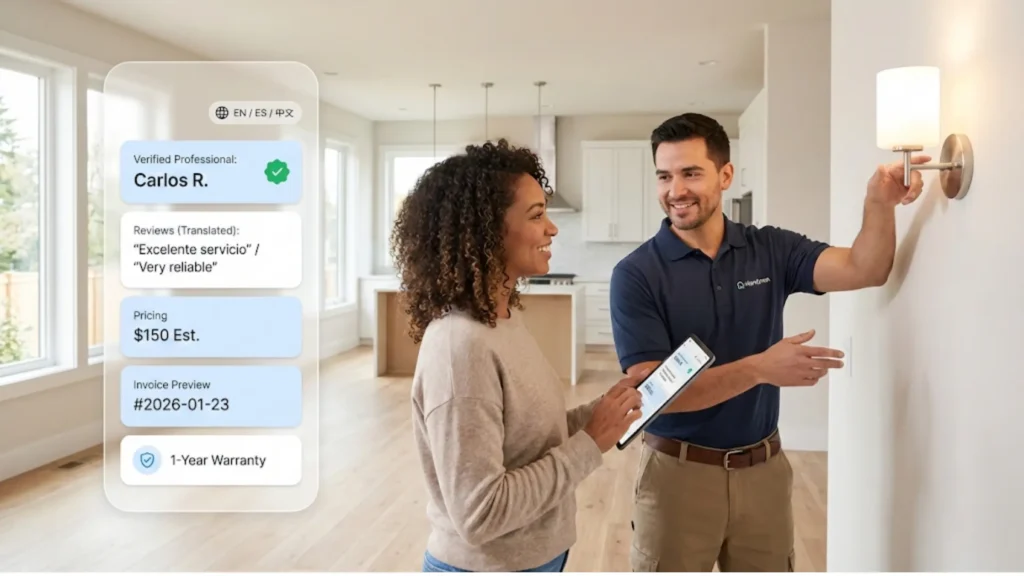
Multilingual handyman apps remove this fear by translating reviews, service policies, invoices, and warranty details into multiple languages. Customers know exactly what to expect before confirming a job. When combined with verified professionals, background checks, and licensing information explained in the user’s language, trust increases significantly.
Multilingual customer support also ensures users feel protected if issues arise during or after service, leading to higher retention and repeat bookings.
Designed for Real US Housing and Rental Scenarios
The US housing market is incredibly diverse. Apartment buildings, rental properties, and multi-family homes often include tenants from different language backgrounds. Property managers and landlords need handyman platforms that work for everyone.
A multilingual handyman app allows tenants to submit maintenance requests in their own language while property managers manage everything from one dashboard. Whether it’s routine maintenance, emergency repairs, or renovation work, language support ensures faster response times and fewer misunderstandings.
This makes multilingual home service apps especially valuable in urban areas, student housing, and multi-ethnic neighborhoods.
Future-Ready Handyman Apps with AI-Powered Language Support
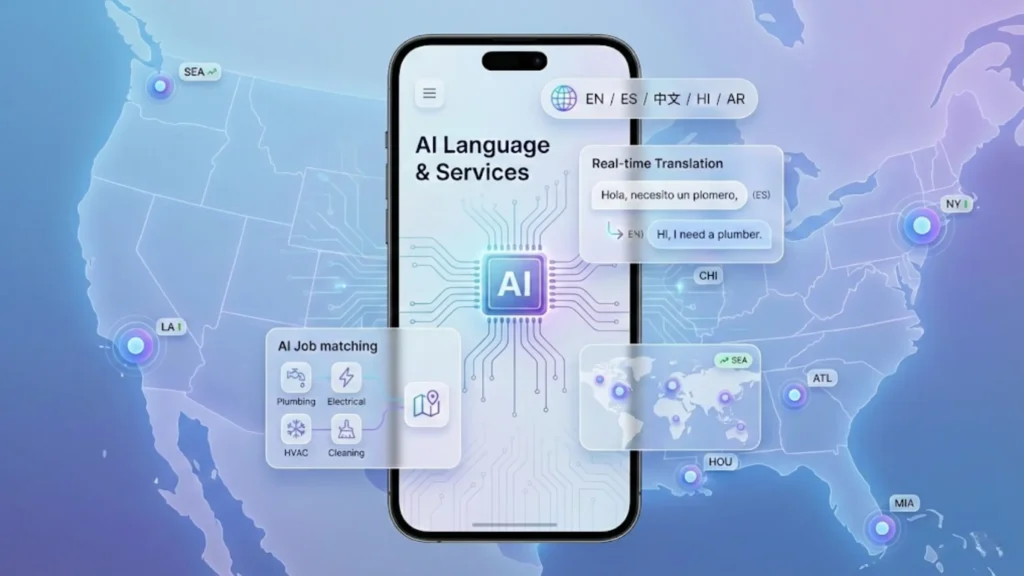
Modern handyman platforms are increasingly powered by AI. In 2026, AI-driven language detection and real-time translation play a key role in delivering seamless multilingual experiences. These systems understand context and service-specific terminology, making translations more accurate for home repair conversations.
From a business perspective, AI makes scaling easy. New languages can be added without rebuilding the app, and localization can be managed centrally. As competition increases, multilingual support is quickly becoming a standard feature rather than a differentiator.
Handyman businesses that invest in AI-powered multilingual apps today are better positioned to scale across multiple US cities tomorrow.
Final Thoughts
A handyman app with multi-language support is built for the reality of the USA. It helps businesses serve more customers, reduces communication errors, builds trust, and supports long-term growth. As user expectations evolve, platforms that prioritize language inclusivity will stand out in an increasingly crowded home services market.