


5/5 - (1 vote)
Understanding Peer-to-Peer Resale Apps
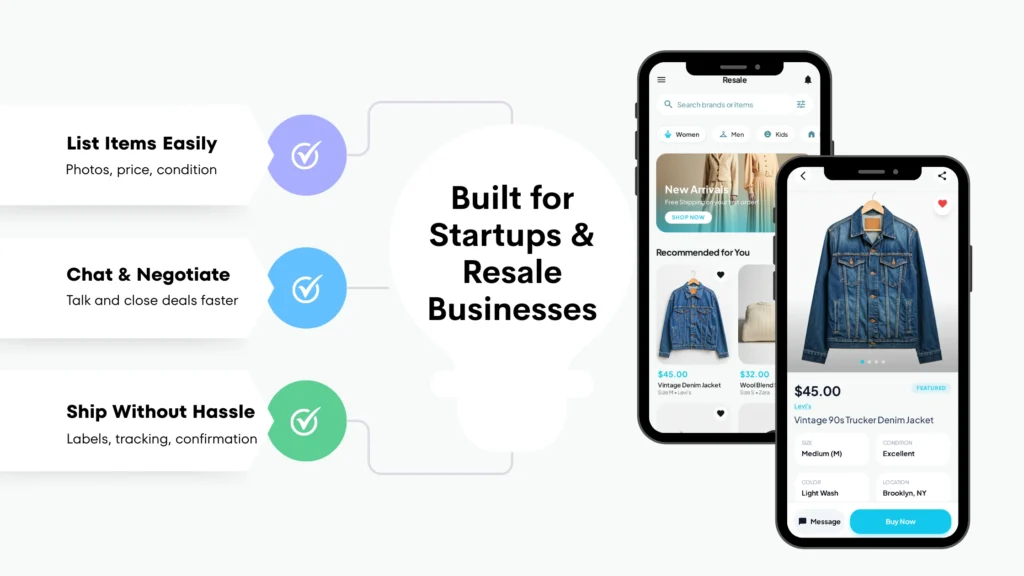
A peer-to-peer resale app is a digital marketplace that allows individuals to buy and sell secondhand items directly, while the platform manages payments, shipping, and trust. Unlike traditional eCommerce stores, these apps don’t own inventory. Instead, they enable circular fashion by extending the life of clothing and reducing textile waste.
Users—especially Gen Z and Millennials—are drawn to resale apps because they combine sustainability with affordability. Vinted differentiates itself through a seller-first model that removes selling fees and charges buyers a small protection fee instead. This structure fuels high listing volume and engagement, proving resale apps are not short-term trends but scalable, sustainable businesses.
Why Build a Resale App Like Vinted?
The resale fashion market is growing faster than traditional retail as consumers shift away from fast fashion toward value-driven and eco-conscious shopping. Investors continue backing recommerce platforms because they scale efficiently, avoid inventory risk, and benefit from repeat transactions.
While Vinted is a major player, it cannot address every niche. New apps can succeed by focusing on specific categories, communities, or regions. Profitability comes from solving liquidity—ensuring buyers and sellers are active at the same time—while offering a more curated and trusted experience than mass-market platforms.
How Vinted Works: Business & Platform Model
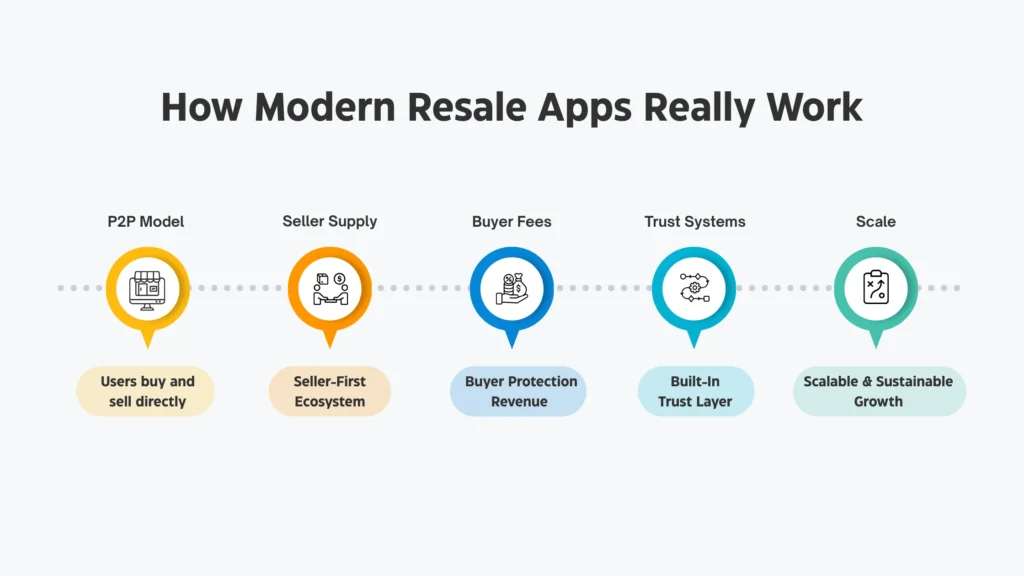
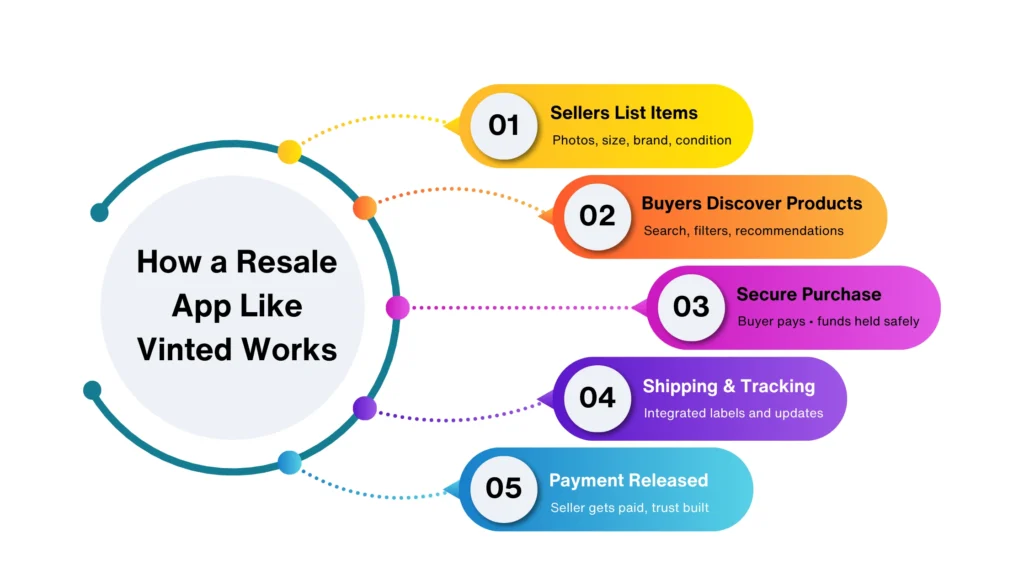
Vinted operates on a consumer-to-consumer model where the platform acts as a facilitator rather than a retailer. Sellers list items freely, buyers purchase through the app, and payments are held securely until delivery is confirmed.
The platform earns revenue through buyer-paid protection fees instead of seller commissions. Integrated shipping labels, escrow payments, and a structured dispute system reduce friction and help Vinted scale across multiple markets without managing inventory or warehouses.
Key Features Required to Build a Vinted-Like App
- User & Seller Features
- Easy sign-up with email or social login
- User profiles with ratings and reviews
- Item listings with photos, size, brand, condition
- Seller dashboard for orders and earnings
- Bundle shipping for multiple items
- Marketplace & Platform Features
- Advanced search and smart filters
- In-app chat and price negotiation
- Secure payments with escrow
- Ratings, reviews, and reporting
- Push notifications for activity updates
- AI & Smart Features
- Personalized item recommendations
- Image-based auto categorization
- Smart resale price suggestions
Monetization Strategies for Resale Apps
Resale platforms typically monetize transactions rather than inventory. Vinted’s buyer protection fee model encourages sellers to list freely while ensuring predictable revenue. Other platforms use seller commissions, subscriptions, or hybrid approaches.
Additional revenue can come from paid visibility features such as listing boosts or promoted placements. For new marketplaces, keeping friction low during early growth is more important than maximizing fees.
Technology Stack to Build a Resale App
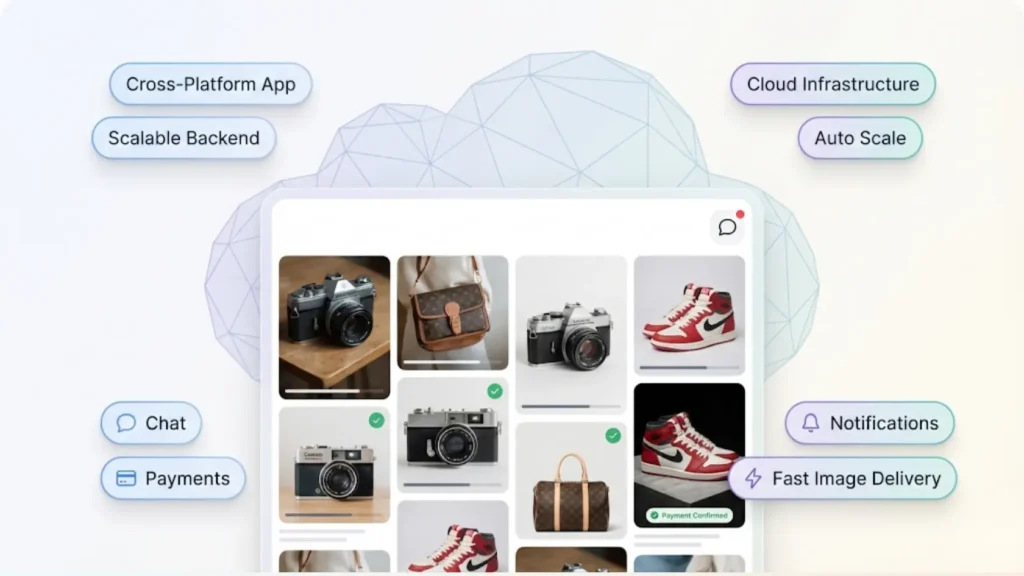
Building a resale app requires a tech stack optimized for performance and image-heavy usage. Cross-platform mobile frameworks reduce development time, while scalable backend services handle chat, payments, and notifications.
Cloud infrastructure enables fast image delivery, auto-scaling, and reliable uptime. Choosing proven technologies early helps avoid costly rework as the platform grows.
Development Approaches: Custom vs White-Label vs No-Code
Custom development provides full control but demands higher budgets and longer timelines. White-label resale solutions allow faster market entry with tested features, while no-code tools work best only for early validation.
Most startups begin with a lean or white-label approach, then invest in custom development once traction and revenue are validated.
Cost to Build a Peer-to-Peer Resale App
Development costs vary based on feature depth, platforms, and approach. MVP builds focus on core flows like listings, chat, and payments, while advanced platforms add AI, fraud prevention, and logistics automation.
Ongoing costs include hosting, third-party APIs, maintenance, and customer support. Cost efficiency comes from launching small, learning fast, and scaling intentionally.
Trust, Safety & Fraud Prevention
Trust is essential in peer-to-peer marketplaces. Escrow payments ensure sellers ship items before receiving funds, while ratings and verification discourage bad behavior.
Fraud detection, clear dispute workflows, and counterfeit reporting protect both users and the platform, increasing long-term retention.
Payments, Shipping & Logistics
Modern resale apps integrate marketplace-ready payment gateways that support escrow and split payouts. Shipping APIs automate label generation and tracking, eliminating manual coordination.
Delivery confirmation triggers fund release, keeping transactions transparent and fair.
Legal & Compliance (US-Focused)
US resale platforms must comply with consumer protection laws, tax regulations, and data privacy requirements. Seller verification and transparent terms help limit liability related to counterfeit goods.
Clear refund and return policies are critical for scaling without legal risk.
How to Launch a Resale App Successfully
Successful launches focus on supply first. Onboarding sellers before buyers ensures the marketplace doesn’t feel empty. Soft launches and niche targeting reduce risk while validating demand.
Avoid launching with too many categories. Focused marketplaces gain traction faster.
Marketing & Growth Strategies
Growth depends on balancing buyers and sellers simultaneously. Influencer marketing, SEO category pages, and referral programs drive early traction.
Community-building and seller incentives improve retention and repeat usage.
Future Trends: AI & Resale
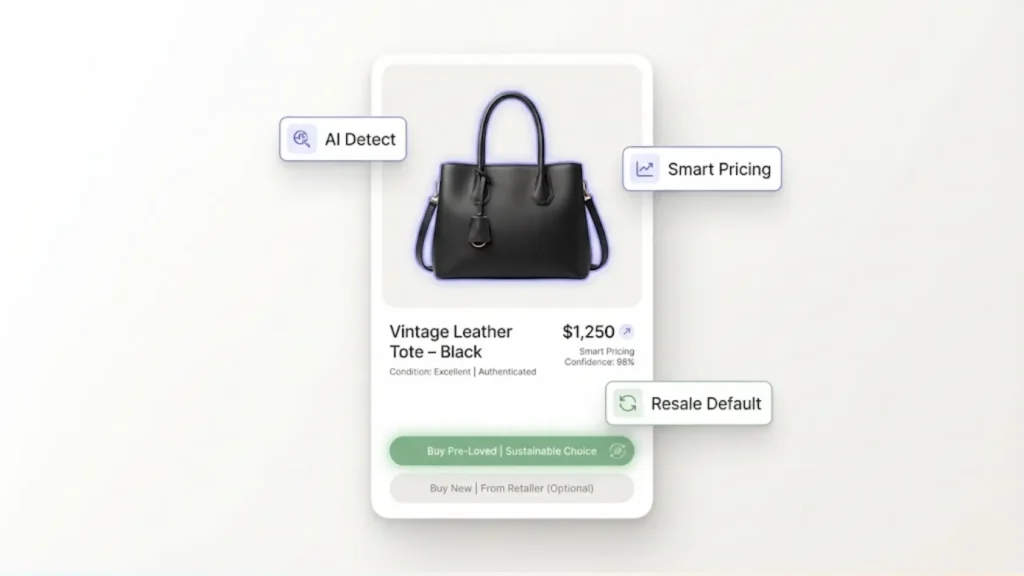
AI will continue reducing listing friction through image recognition and auto-pricing. Sustainability will remain the core driver, with resale becoming a default shopping behavior rather than an alternative.
Conclusion
Building a peer-to-peer resale app like Vinted is a long-term opportunity rooted in sustainability and behavioral change. Success depends on trust, liquidity, and execution—not feature overload.
Starting with a focused MVP, validating demand, and scaling gradually is the most reliable path forward.