


Rate this post
Why the Car Sharing Business Needs a Smarter ROI Strategy
Is the car sharing business profitable?
Yes—but only when built on the right foundation. Profitable car sharing platforms focus on asset utilization, automation, and scalable monetization, not just bookings. Platforms that ignore ROI planning often struggle despite strong demand.
Core challenges in running a car sharing marketplace
Car sharing businesses face unique operational and financial challenges:
- High platform development costs
- Fleet onboarding and verification complexity
- Manual booking, pricing, and dispute management
- Revenue leakage due to poor commission tracking
- Customer acquisition costs rising faster than revenue
Without a strong ROI strategy, these costs quickly erode margins.
Why car sharing startups fail
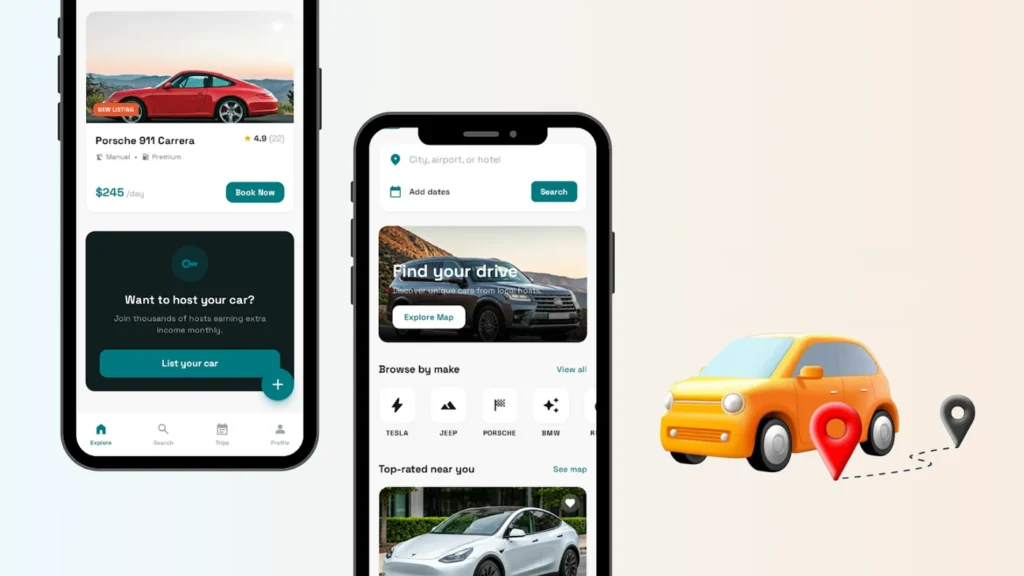
Most failures are execution failures, not market failures. Common reasons include:
- Building custom software that takes 12–18 months to launch
- Overengineering features before validating demand
- Inflexible pricing and weak monetization models
- Poor automation leading to high operational overhead
- Customer acquisition costs rising faster than revenue
Build vs buy: the ROI reality
Building a car sharing platform from scratch often looks attractive on paper—but in reality:
- Development costs are unpredictable
- Maintenance becomes a recurring burden
- Feature upgrades lag behind market needs
- Poor automation leading to high operational overhead
A ready-made car sharing marketplace solution dramatically reduces upfront risk, speeds up time-to-market, and improves ROI from day one.
Why traditional car rental models deliver lower ROI
Traditional rental businesses rely on:
- Heavy fleet ownership
- Fixed pricing
- Manual operations
Peer-to-peer and marketplace-based car sharing models shift asset ownership to users, enabling:
- Lower capital investment
- Dynamic pricing
- Faster scalability
This makes car sharing a more scalable and ROI-friendly business model—when powered by the right software.
This makes car sharing a more scalable and ROI-friendly business model—when powered by the right software.

Use ready-made car sharing marketplace software
A turnkey solution eliminates the biggest ROI killers:
Core challenges in running a car sharing marketplace
- Long development cycles
- High engineering costs
- Delayed revenue generation
With a ready-made platform, founders can launch in weeks instead of months and start validating revenue immediately.
Reduce development and operational costs
Pre-built solutions come with:
- Core marketplace architecture
- Tested booking and payment flows
- Built-in admin dashboards
This avoids repeated reinvention and significantly lowers both initial and ongoing costs.
Monetization models that maximize ROI
A strong car sharing marketplace solution supports multiple revenue streams:
- Commission-based model (percentage per booking)
- Subscription plans for hosts or fleet owners
- Featured listings and priority placement
- Dynamic pricing markups during peak demand
The best platforms allow you to combine these models without friction.
Commission-based vs subscription models
- Commission-based works best in early stages—lower entry barriers, faster growth
- Subscription-based models stabilize long-term revenue once supply and demand are established
A flexible solution lets you evolve without rebuilding the platform.
Dynamic pricing for higher utilization
Dynamic pricing based on:
- Time (hourly, daily, long-term)
- Location
- Demand surges
helps maximize vehicle utilization and revenue per asset—one of the most critical ROI drivers in car sharing.
Automation prevents revenue leakage
Automation features that protect margins include:
- Automated booking approvals
- Smart commission calculations
- Security deposit handling
- Late return and cancellation penalties
This ensures every transaction is monetized correctly without manual intervention.
How to Assess ROI Before and After Launch
How to calculate ROI for a car sharing marketplace
ROI is influenced by:
- Platform cost
- Time to market
- Revenue per booking
- Monthly operating expenses
- Platform scalability
A faster launch and lower fixed costs significantly shorten the ROI timeline
Cost: custom development vs ready-made solution
- Custom-built platforms: High upfront cost + ongoing development expense
- Ready-made solutions: Predictable pricing + faster break-even
Most startups recover investment faster with ready-made software due to early revenue generation.
Time to break even
With the right solution, many car sharing marketplaces can
- Launch within weeks
- Generate revenue in the first month
- Reach break-even within a few quarters (depending on market and marketing strategy)
Key ROI metrics to track

Successful platforms monitor:
- Customer acquisition cost (CAC)
- Average revenue per vehicle
- Booking frequency per user
- Platform commission margins
- Churn rate (hosts and renters)
Built-in analytics and reporting are essential for ROI visibility.
Maintenance and scalability costs
A professionally built marketplace solution:
- Reduces maintenance overhead
- Includes security, performance, and feature updates
- Avoids expensive rework as you scale
This protects long-term ROI as the platform grows.
This protects long-term ROI as the platform grows.
Multi-city and multi-fleet scalability
A scalable car sharing marketplace solution supports
- Multiple cities and regions
- Different fleet types under one platform
- Local pricing and tax configurations
This enables expansion without duplicating infrastructure
Expanding into high-value niches
To increase lifetime ROI, platforms often expand into:
- EV car sharing for sustainability-focused users
- Luxury and premium vehicles for higher margins
- Corporate car sharing for predictable B2B revenue
- Urban commuter-focused fleets
- Cargo vans and truck sharing for commercial demand
A flexible solution lets you add these verticals without rebuilding core systems
Long-term profitability advantage
The real ROI advantage comes from
- Software that grows with your business
- Monetization flexibility
- Operational automation
- Data-driven optimization
Platforms built this way scale faster, operate leaner, and remain profitable across market cycles.
Final Takeaway
Maximizing ROI in the car sharing business is less about the idea and more about execution. Founders who choose a ready-made, scalable car sharing marketplace solution reduce risk, launch faster, control costs, and unlock multiple revenue streams early.
If your goal is to build a profitable, scalable, and future-ready car sharing platform, ROI should guide every decision—from software selection to expansion strategy.